

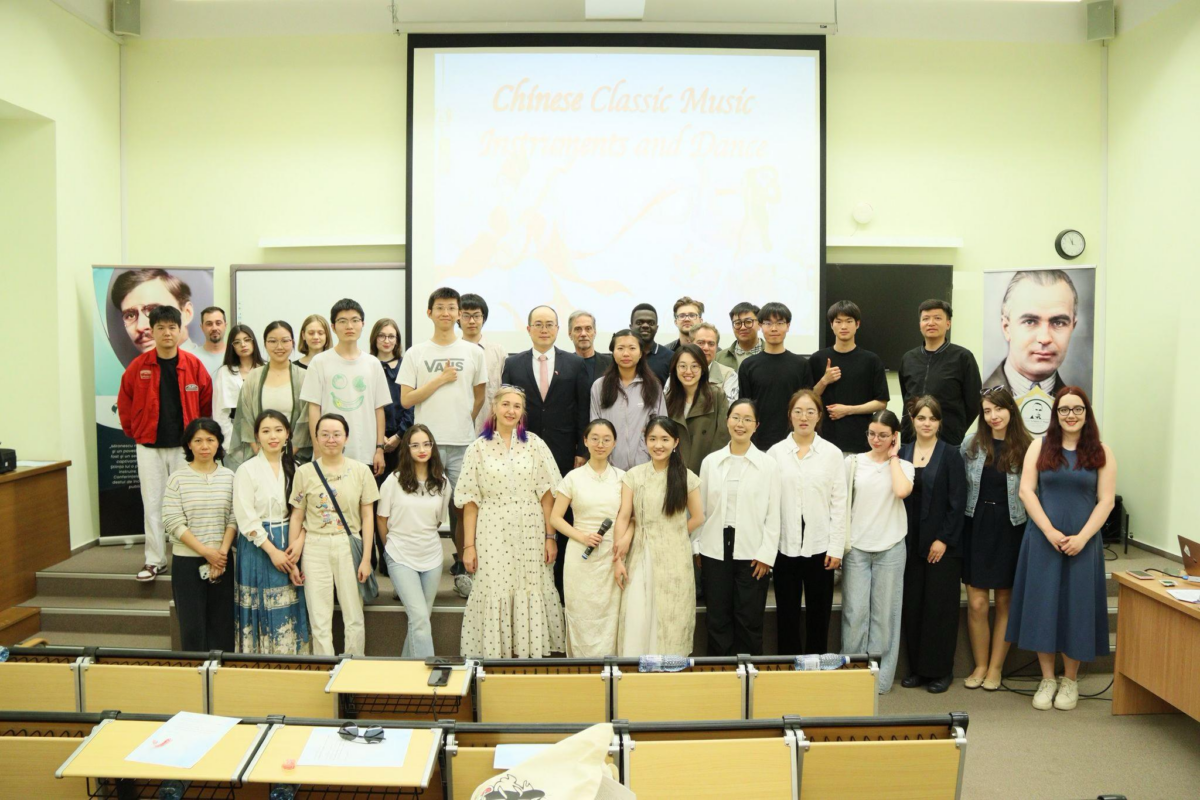
The Chinese Culture Experience Month, carefully planned and hosted by the Confucius Institute at Grigore T. Popa University of Medicine and Pharmacy in Iași, was successfully held from April 28 to May 26, 2026. Through five immersive cultural events, the program offered rich content, innovative formats, and lively interaction, enabling Romanian teachers, students, and local residents to experience firsthand the unique charm of Chinese culture while further strengthening the bridge of friendship that transcends language and geography.
Centered on five major themes — Chinese and Romanian proverbs, Chinese songs, traditional music and dance, Hanfu aesthetics, and Chinese film appreciation — the month-long series combined educational value, artistic expression, and entertainment. It attracted enthusiastic participation from Chinese and Romanian students, faculty members, and members of the public alike. Warm and vibrant throughout, the events vividly reflected cultural dialogue and mutual appreciation, becoming a living testament to the deepening friendship between the peoples of China and Romania.
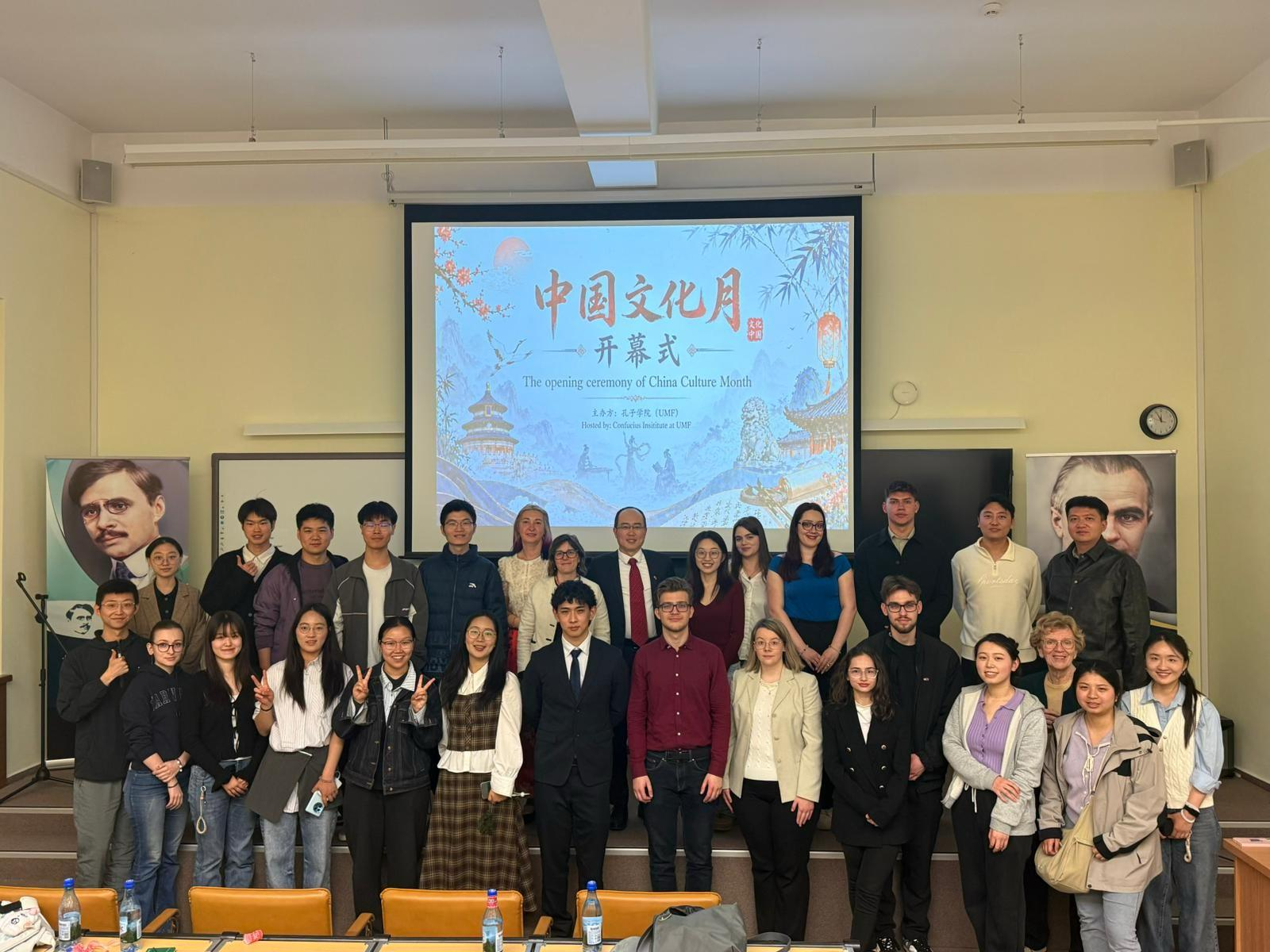
On the evening of April 28, the “Taste China, Resonating with Romania” Chinese Culture Experience Month officially opened. Ms. Ruge, the Romanian Director of the Confucius Institute, hosted the opening ceremony, while Professor Georgeta-Liliana FOIA, Vice President of the university, delivered remarks expressing high praise and sincere expectations for the cultural exchange activities.
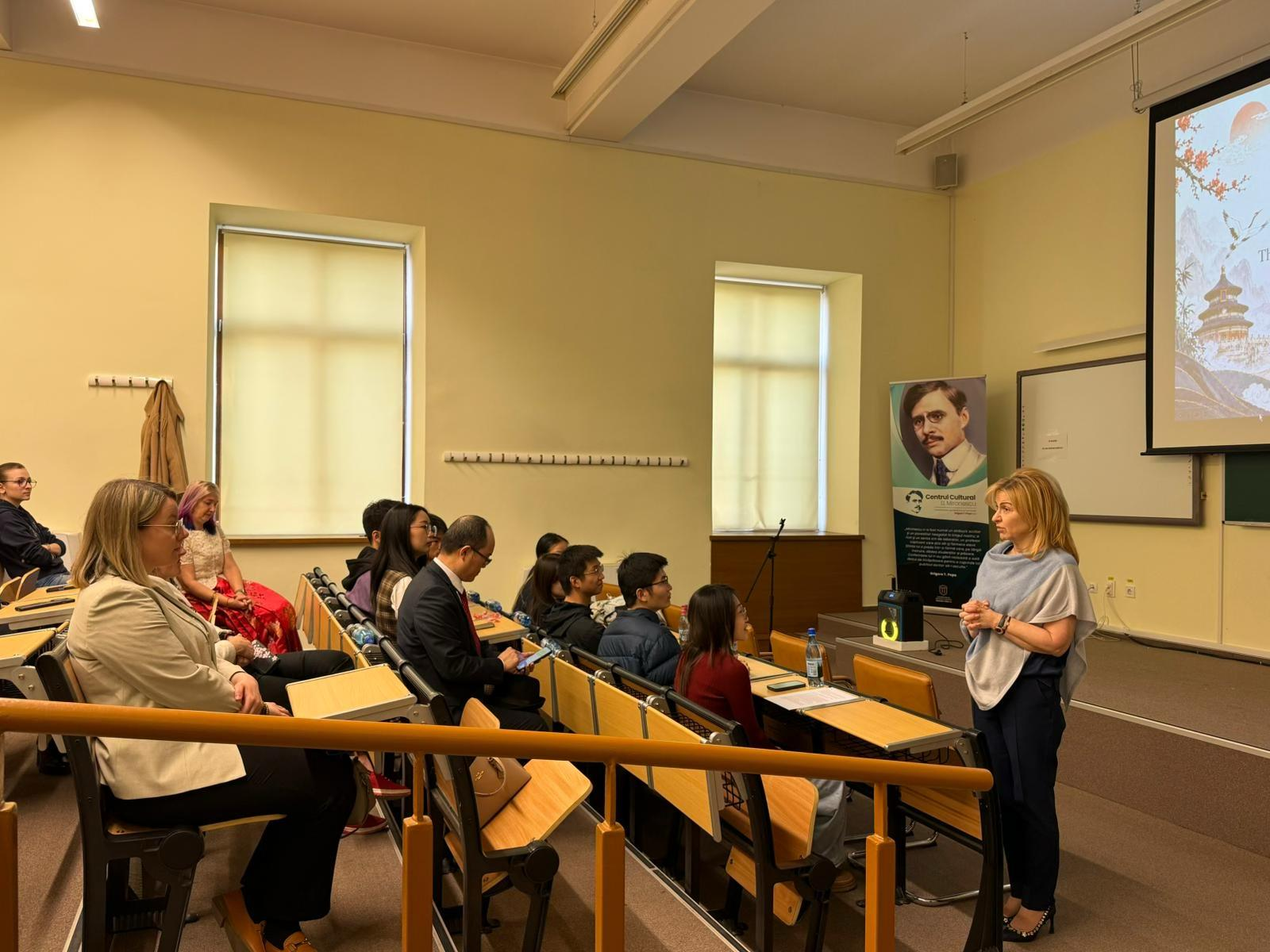
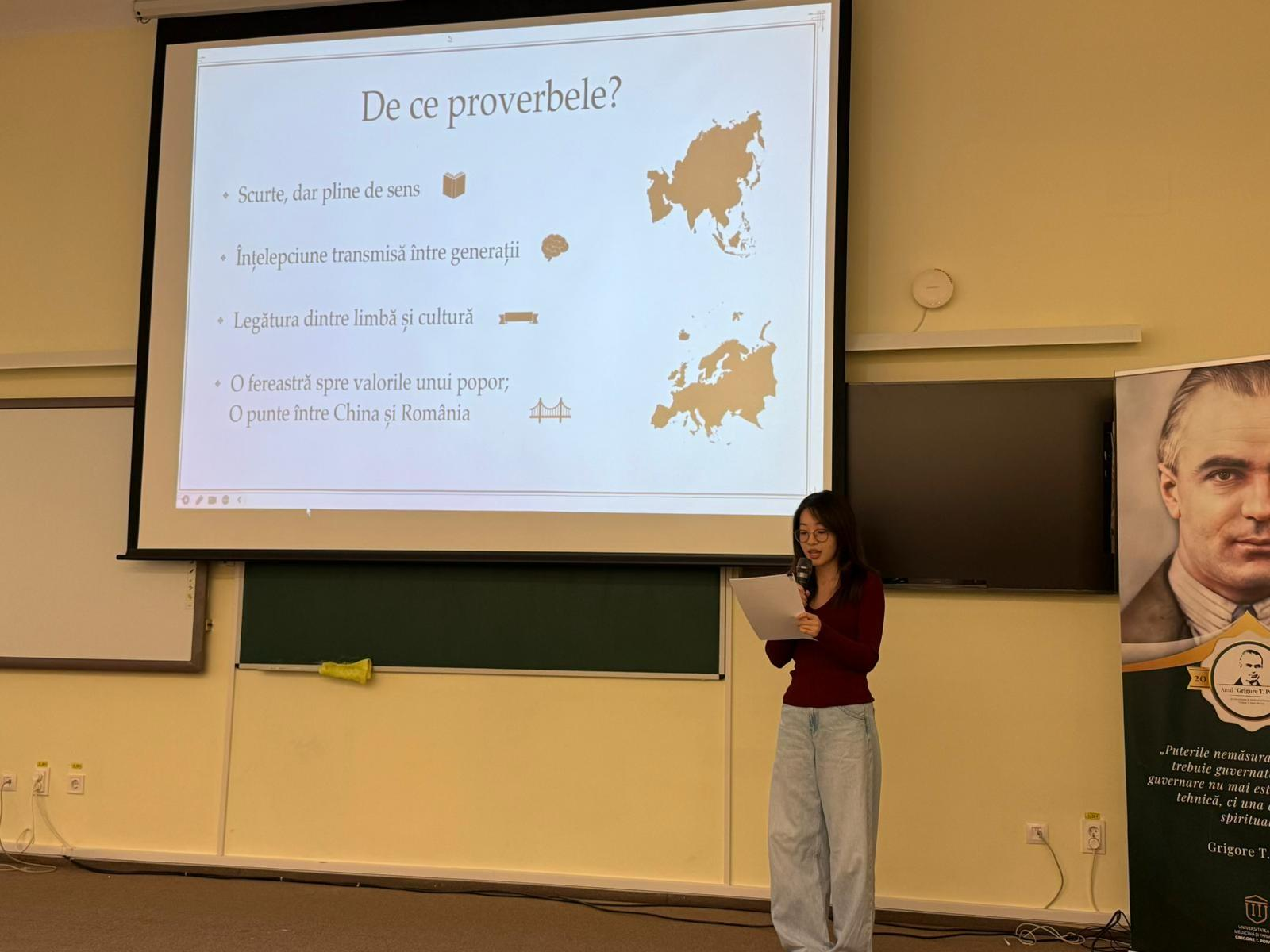
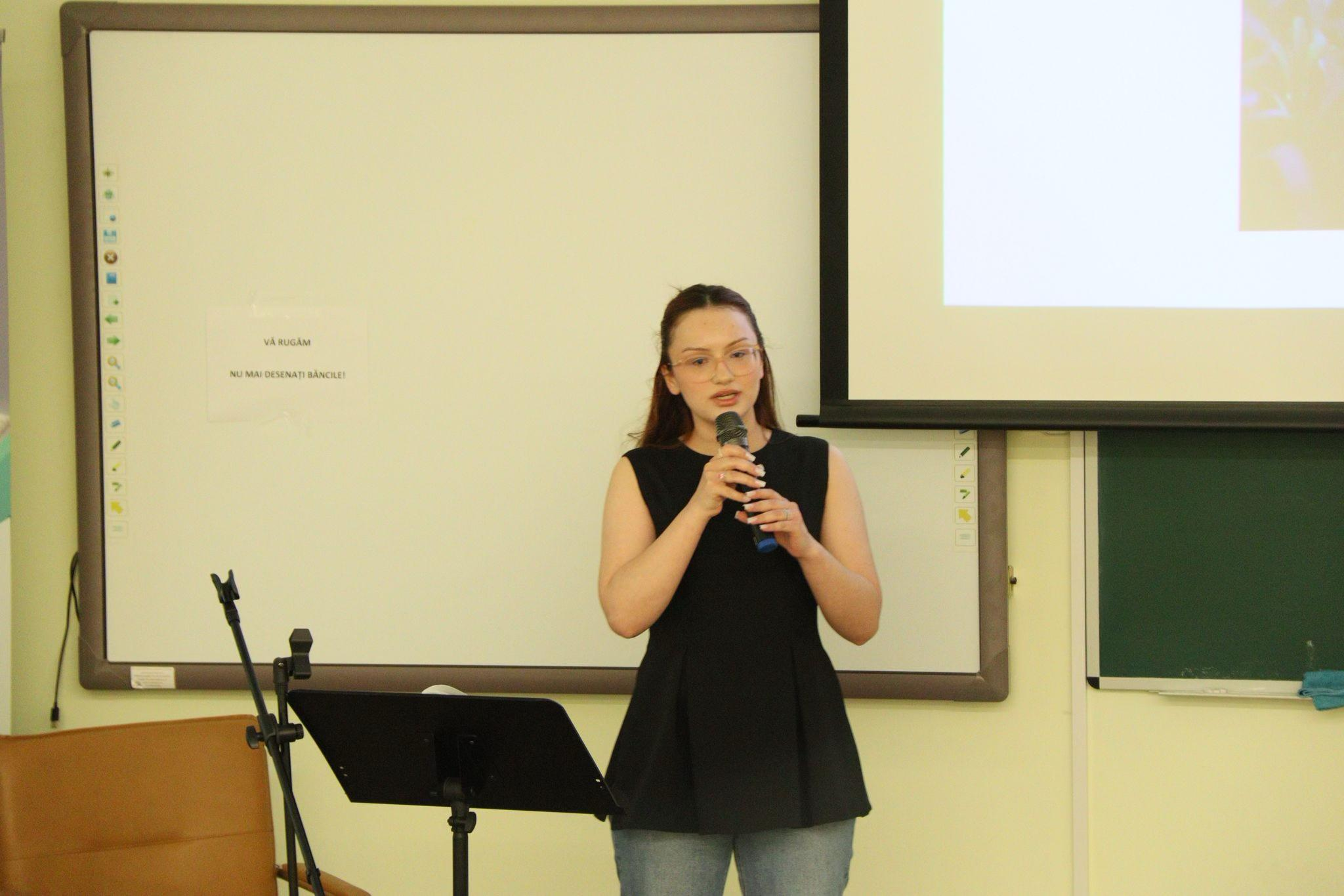
As the opening event of the program, the lecture titled “Words with Profound Meaning: Comparative Study of Chinese and Romanian Proverbs and Their Cross-Cultural Appeal” was delivered by Zhang Yiran, a Sinologist from Alexandru Ioan Cuza University.Using proverbs as a unique point of entry, the lecture explored the deep relationship between language and culture by comparing Chinese and Romanian proverbs in terms of expression, sentence structure, cultural connotations, and underlying values.
Drawing upon numerous vivid and relatable examples, the speaker highlighted both the differences and commonalities between the two cultures in historical experience and ways of thinking. The lecture also emphasized the irreplaceable role proverbs play in fostering intercultural understanding and communication, guiding the audience to discover the profound connections and unique appeal shared by Chinese and Romanian culture through lively linguistic phenomena.
During the interactive session, audience members enthusiastically raised questions and engaged in lively discussions about the folk origins and cultural meanings behind the proverbs. Through this exchange of ideas, participants further deepened their understanding, respect, and appreciation for each other’s cultures.
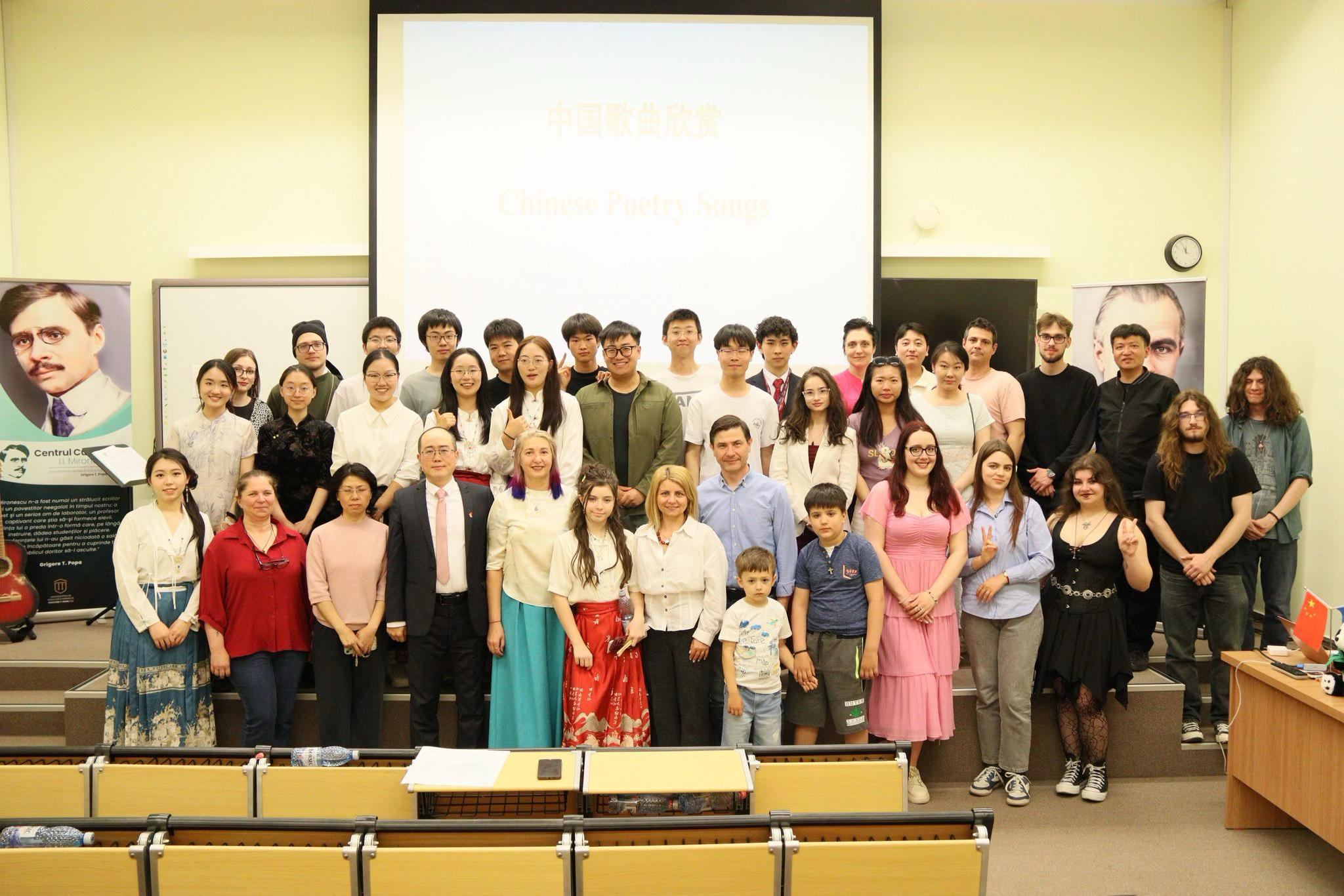
hosting of Professor Chen Gong, the Chinese Director of the Confucius Institute. Structured around the two major stylistic traditions of classical Chinese poetry — graceful lyricism and heroic boldness — the event used music to interpret poetry and poetry to express emotion, leading the audience into the aesthetic world where Chinese verse and melody intertwine.
The musical program unfolded with one captivating performance after another. Li Xinyi, a clinical medicine intern from Huazhong University of Science and Technology, performed Yu Meiren by Li Yu, the last ruler of the Southern Tang Dynasty, with deep emotion and lingering elegance. Director Chen Gong personally accompanied himself on guitar while singing Li Qingzhao’s famous lyric Moonlight over the West Tower. The graceful lyrics and gentle melody vividly conveyed the refined beauty of classical Chinese poetry.
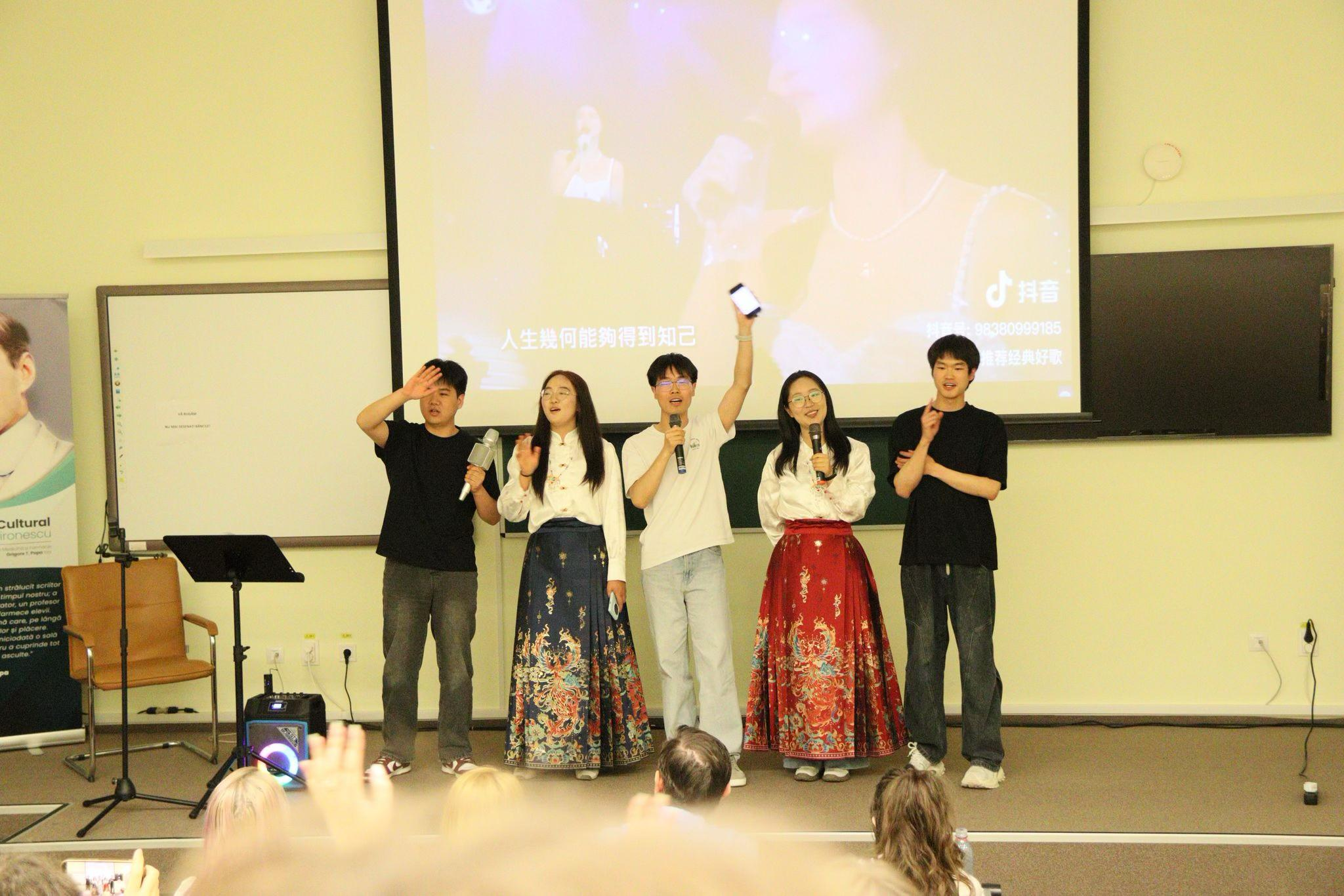
International student Yao Yiwen performed The Kite Mistake, her soft and melodious voice leaving a lasting impression. Five male students from Huazhong University presented the bold and powerful classic Green Jade Table · Lantern Festival Night, showcasing the heroic grandeur of Song Dynasty poetry through a majestic group performance.Through accessible English explanations, guitar accompaniment, and heartfelt performances by the students, Director Chen Gong demonstrated profound knowledge of classical Chinese literature and music. The event blended poetry and song seamlessly, offering the audience an immersive artistic experience and allowing the beauty of traditional Chinese culture to resonate deeply in their hearts.
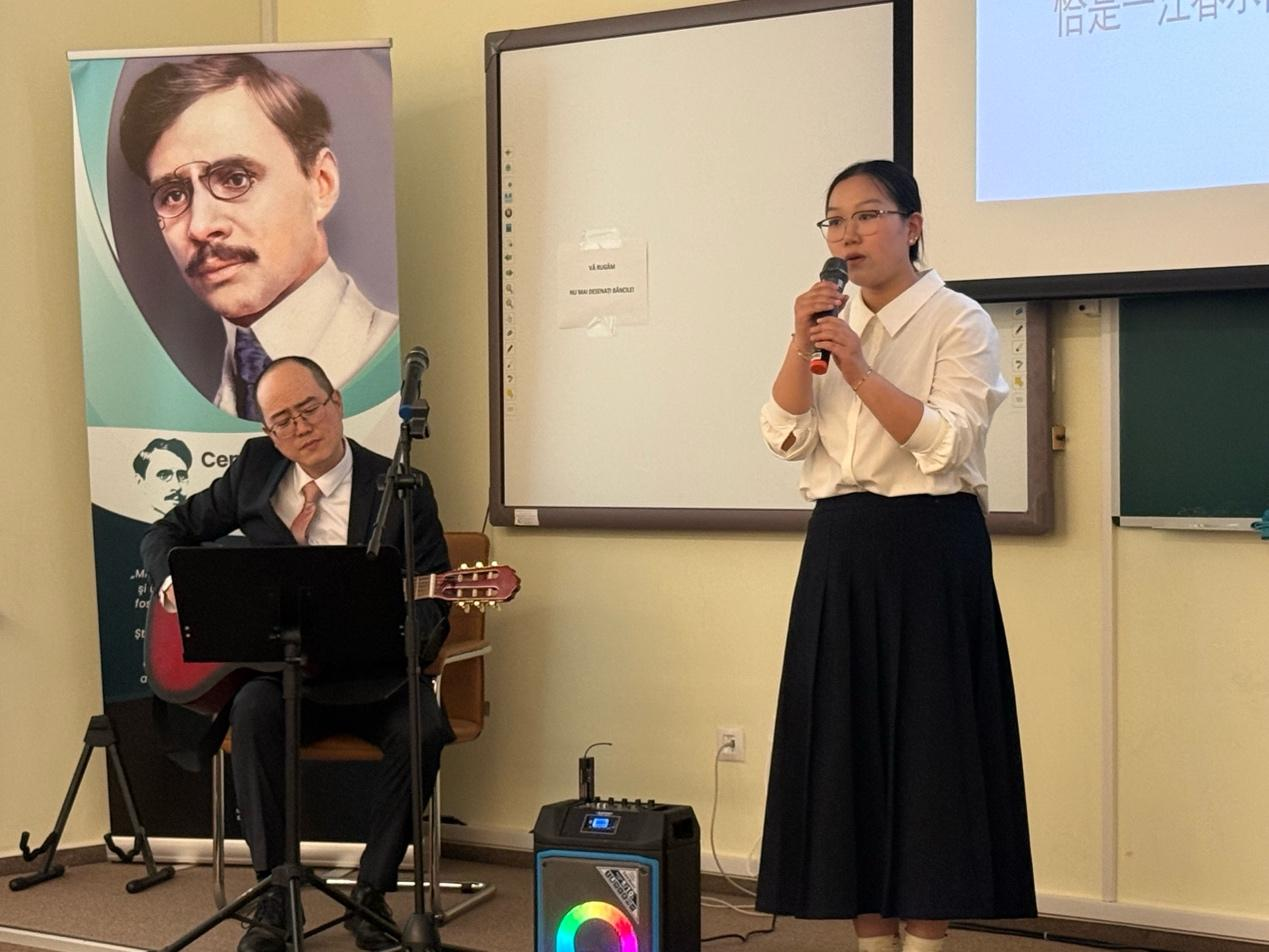
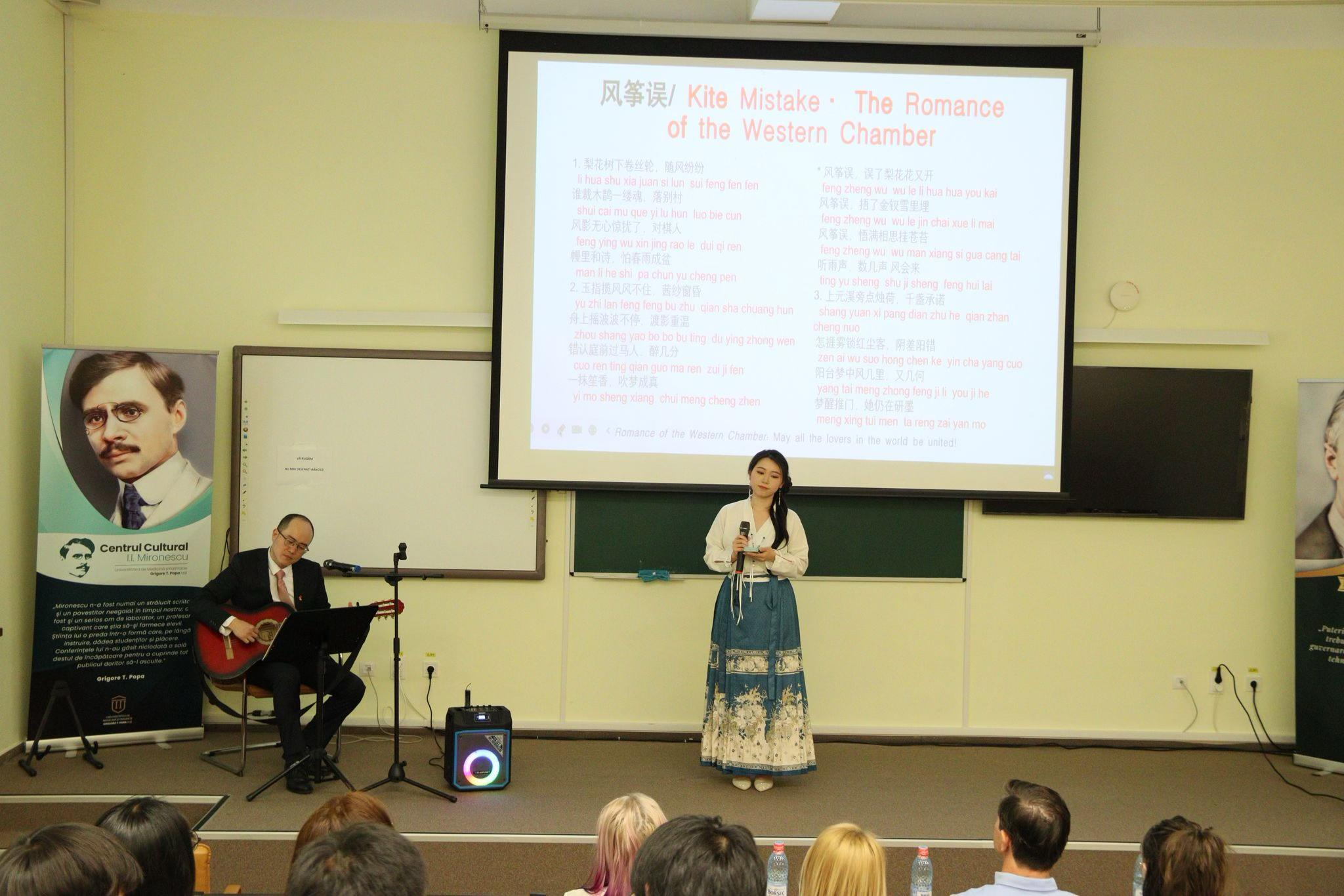
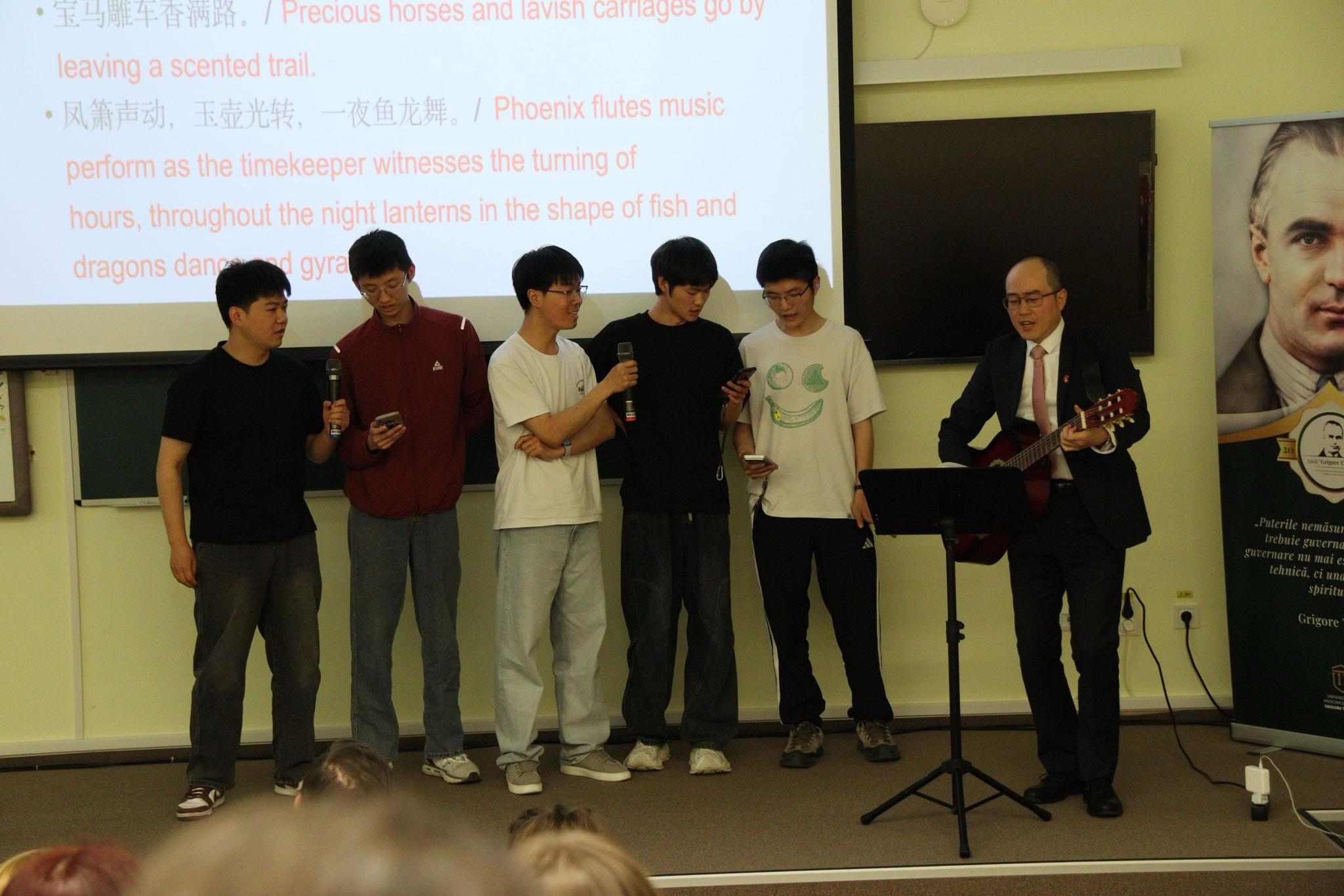
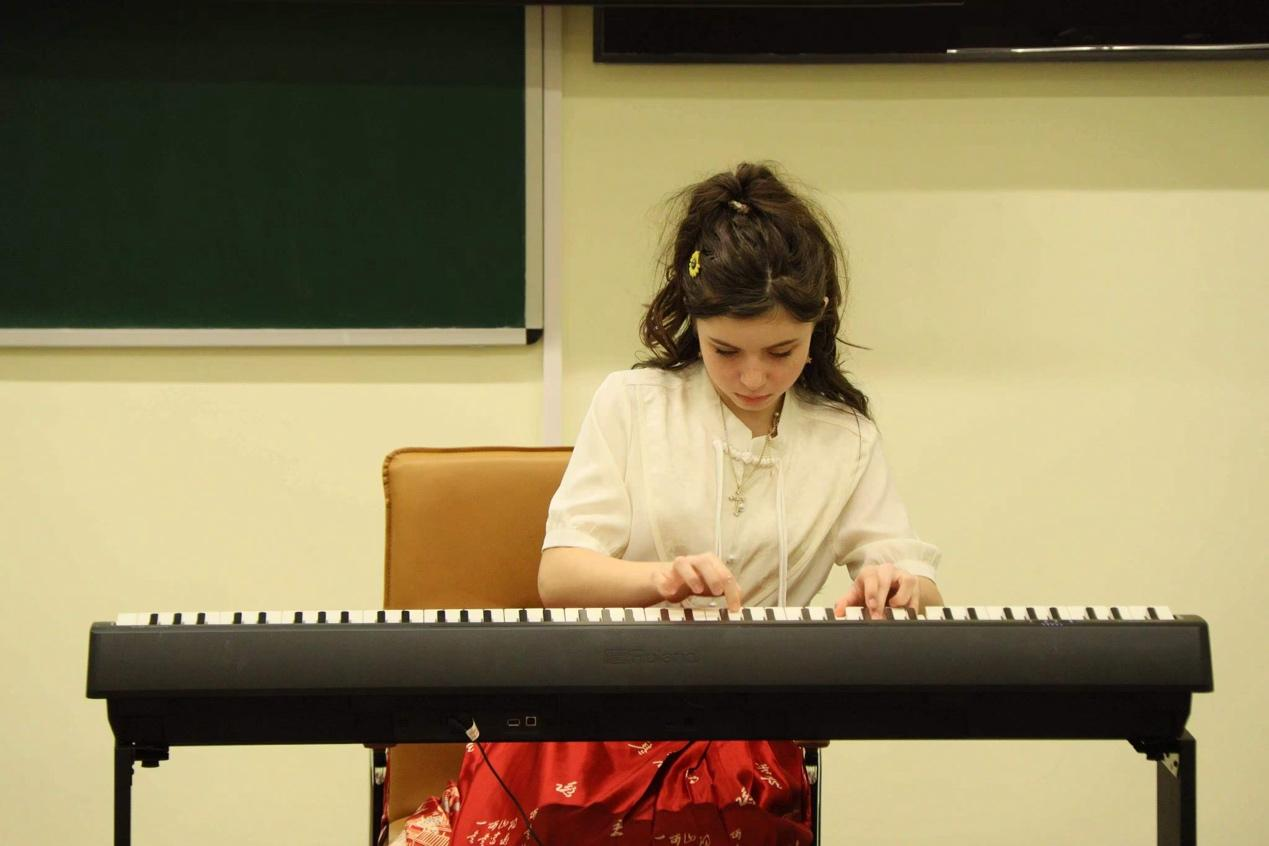
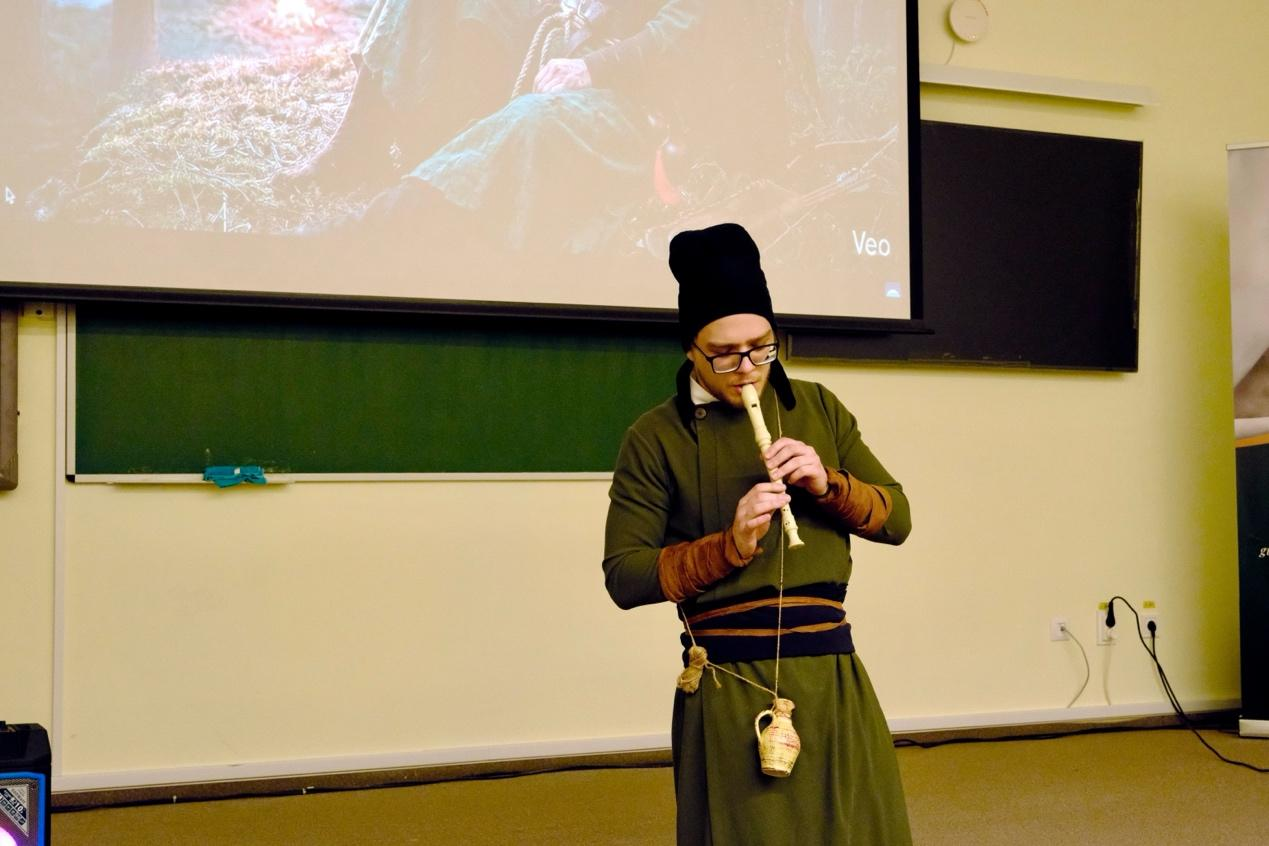
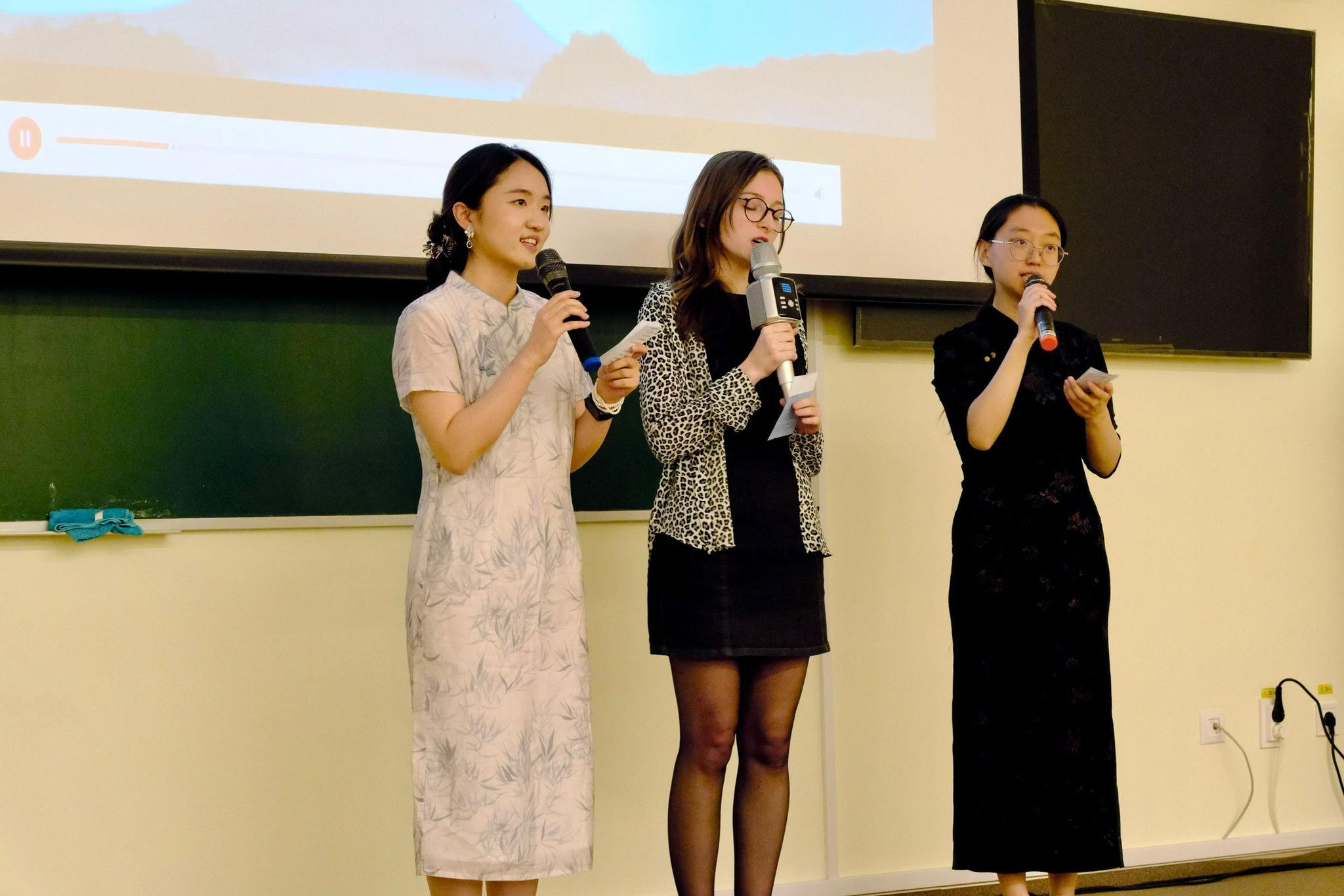
Following the intermission, the second half of the concert featured more Chinese songs. Romanian student Tara ILIES accompanied the audience on electronic keyboard as everyone sang the beloved Chinese folk song Jasmine Flower together, filling the venue with pure and soothing melodies. Dimitrie IeȚcu from Alexandru Ioan Cuza University appeared in Hanfu attire, carrying a wine flask and holding a letter prop while performing May We All Be Blessed with Longevity. Incorporating recorder playing and dramatic performance, he delivered an expressive and emotionally moving interpretation. Doina Zavtoni, a student from the Faculty of Pharmacy at Grigore T. Popa University, sang The World Has Given Me, impressing the audience with her accurate pronunciation and heartfelt expression. Teodora Ursu joined teachers Liu Zhitong and Bo Shengyi in a duet of The Moon Represents My Heart, whose tender melody and sincere emotion deeply touched the audience.
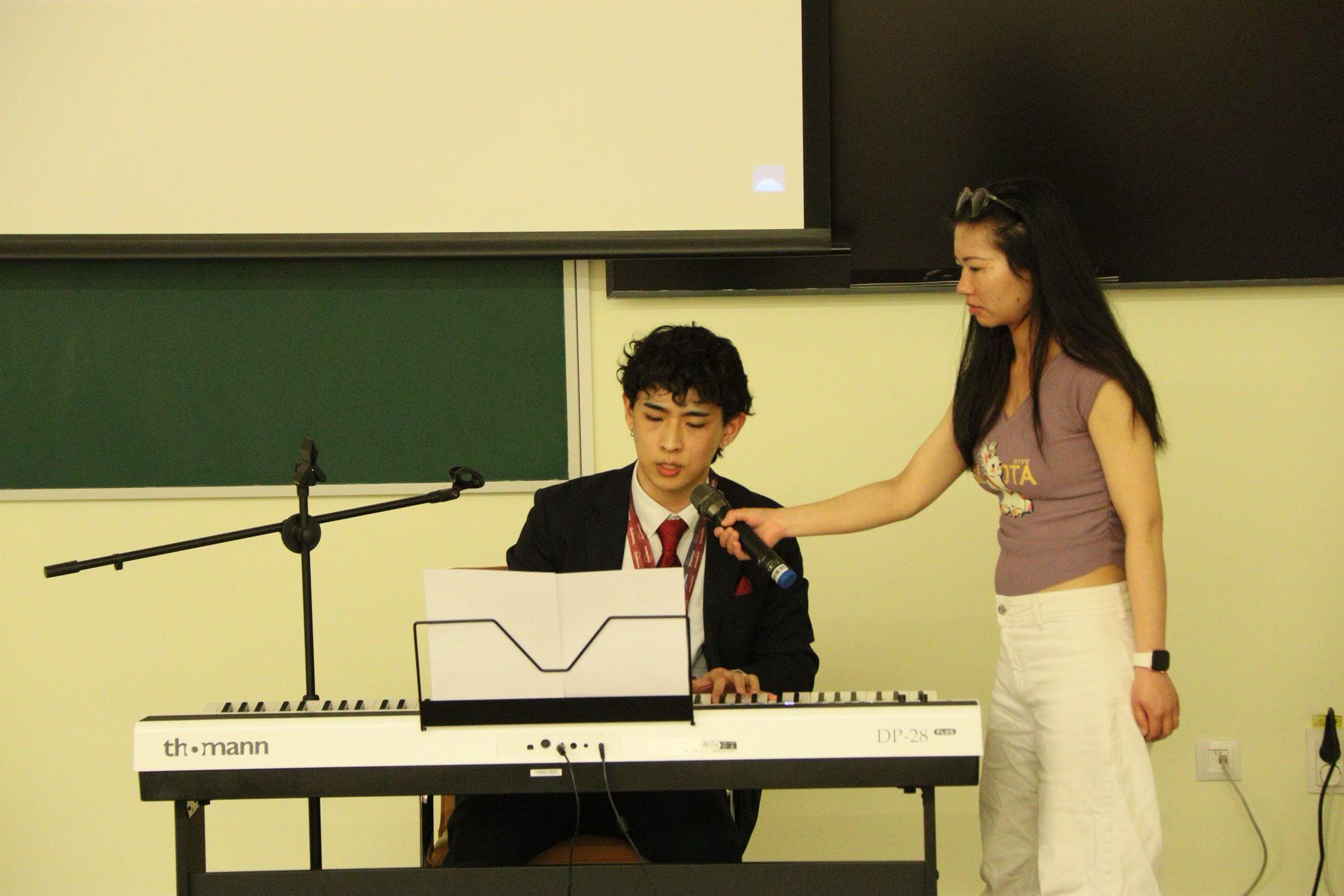
Students Zhao Shuai, Li Tong, and others from the Integrated Chinese and Western Medicine Experimental Program of Tongji Medical College performed the classic song I Only Care About You, conveying warmth and sincerity through harmonious vocals. Japanese student Yuta Matsuura performed Drunken Dreams of the Past with keyboard accompaniment, creating an elegant and atmospheric performance. At the conclusion of the event, all participants joined together in singing Love of Rivers and Mountains, expressing both patriotic sentiment and the profound friendship shared by Chinese and Romanian youth. The resonant chorus brought the evening to an emotional climax.
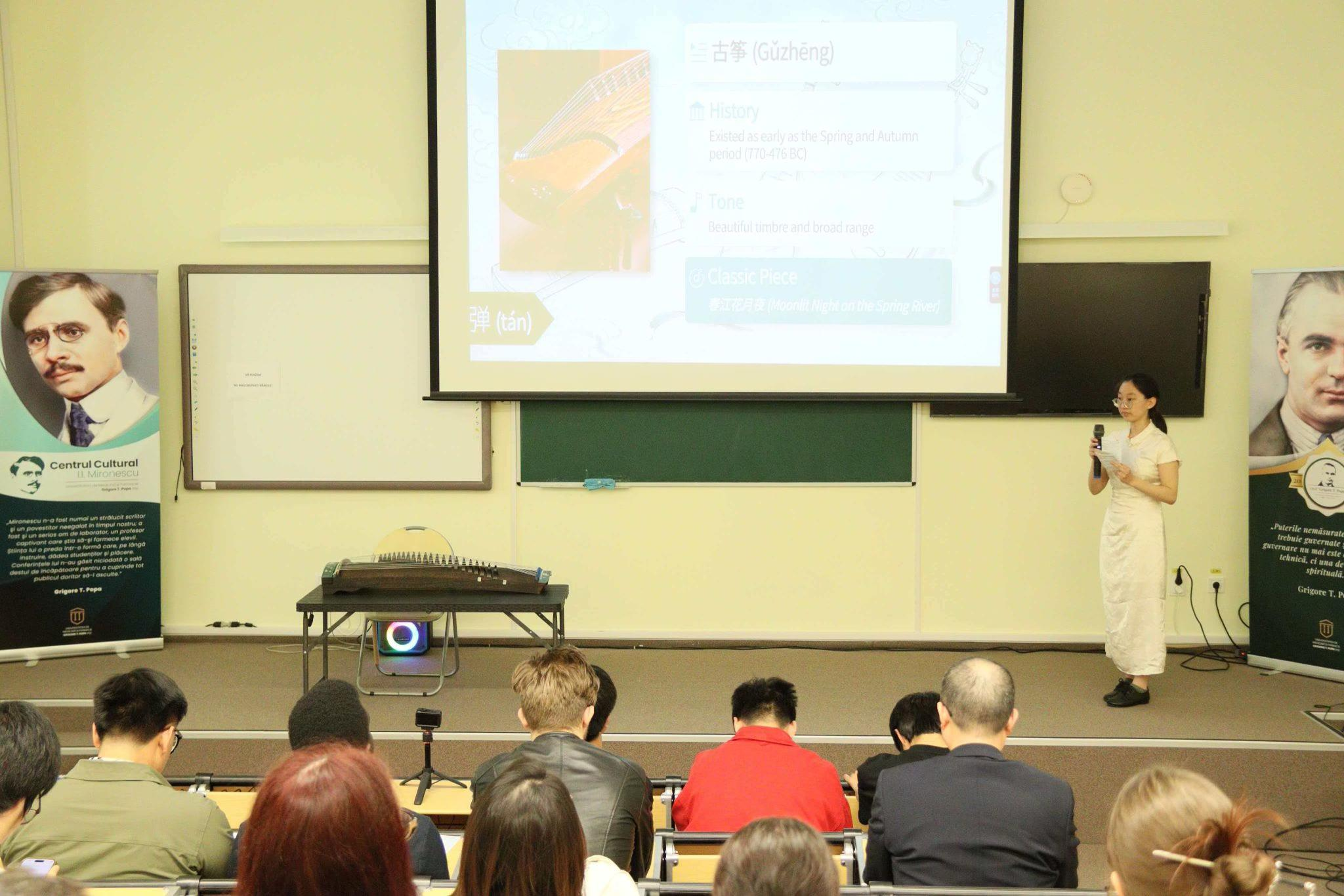
On the evening of May 7, a special showcase of Chinese classical music and dance was held as one of the major highlights of the Culture Month, offering the audience a stunning feast for both the eyes and ears. The event was hosted by Bo Shengyi, a Chinese language volunteer teacher from Beijing Language and Culture University, while Liu Zhitong provided introductions to traditional instruments. Through the integration of explanation and live performance, the event comprehensively presented the beauty of Chinese traditional music and dance.
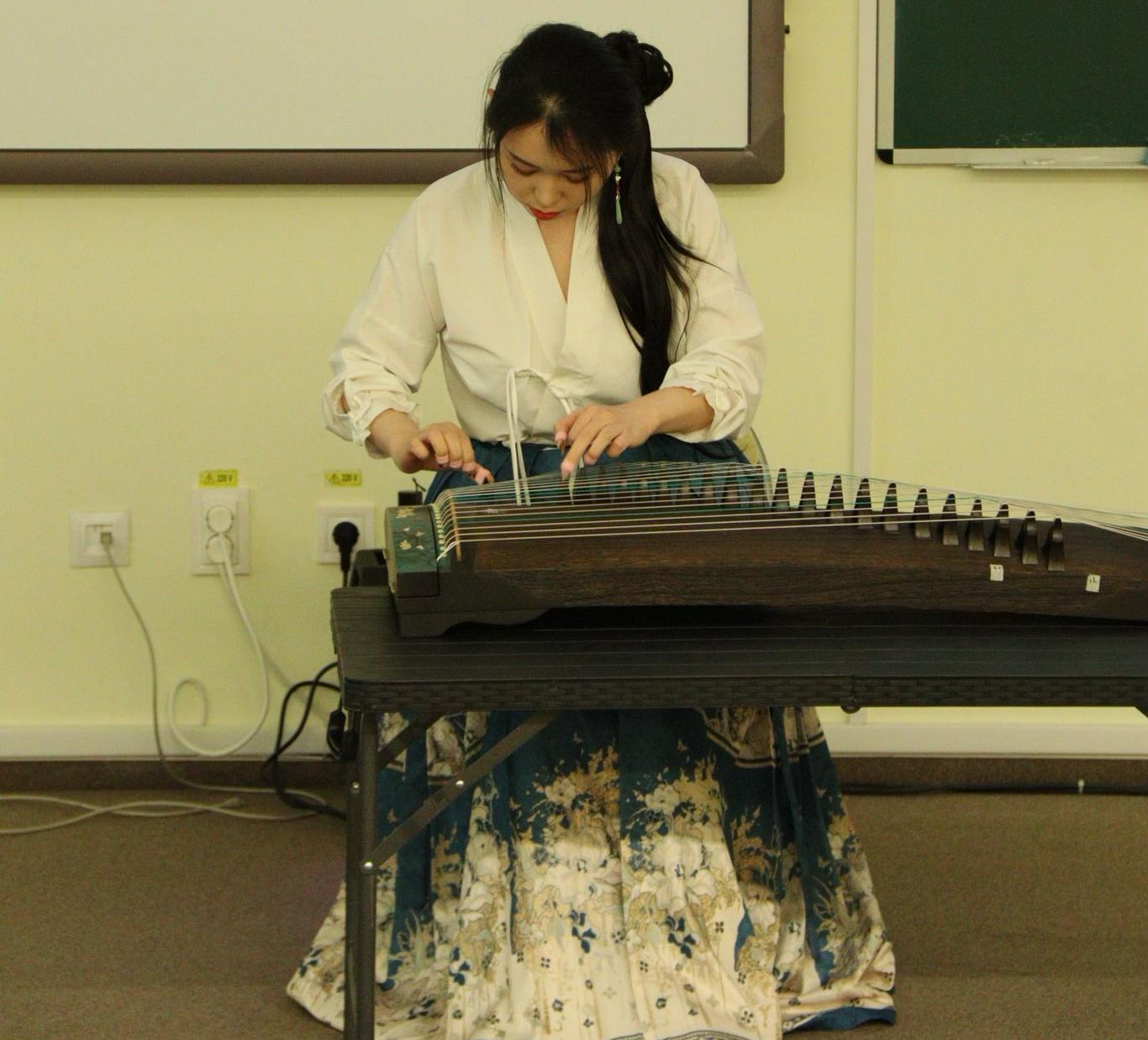
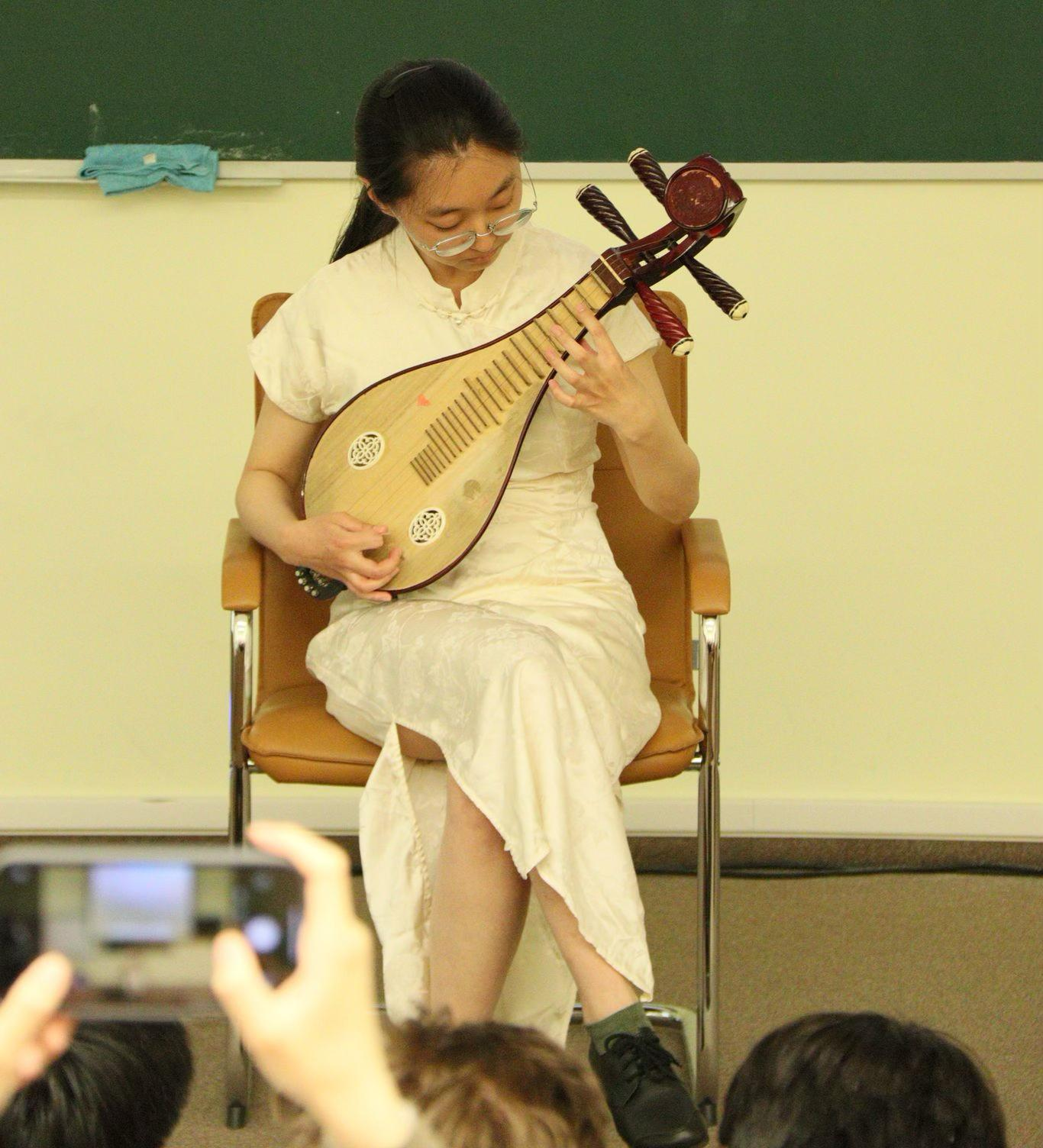
Liu Zhitong systematically introduced various traditional Chinese instruments, their tonal qualities, and their cultural significance, inviting the audience to immerse themselves in the unique charm of Chinese folk music. Instrumental performances followed one after another: international student Yao Yiwen performed the guzheng solo Liuyang River, whose bright and flowing melody captivated listeners, while Liu Zhitong performed Dance of the Yao People on the liuqin, bringing lively rhythms and rich ethnic flavor to the stage.
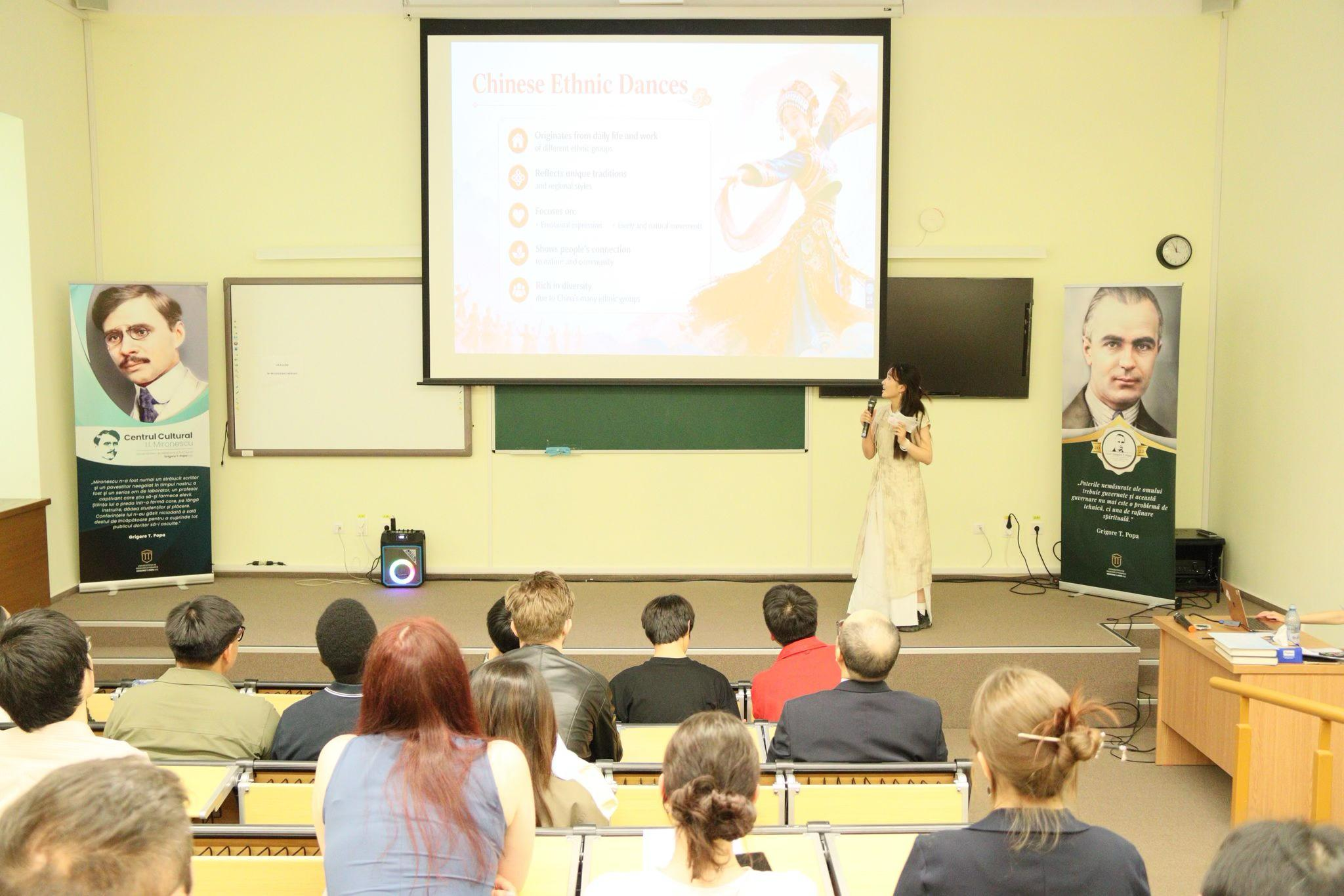
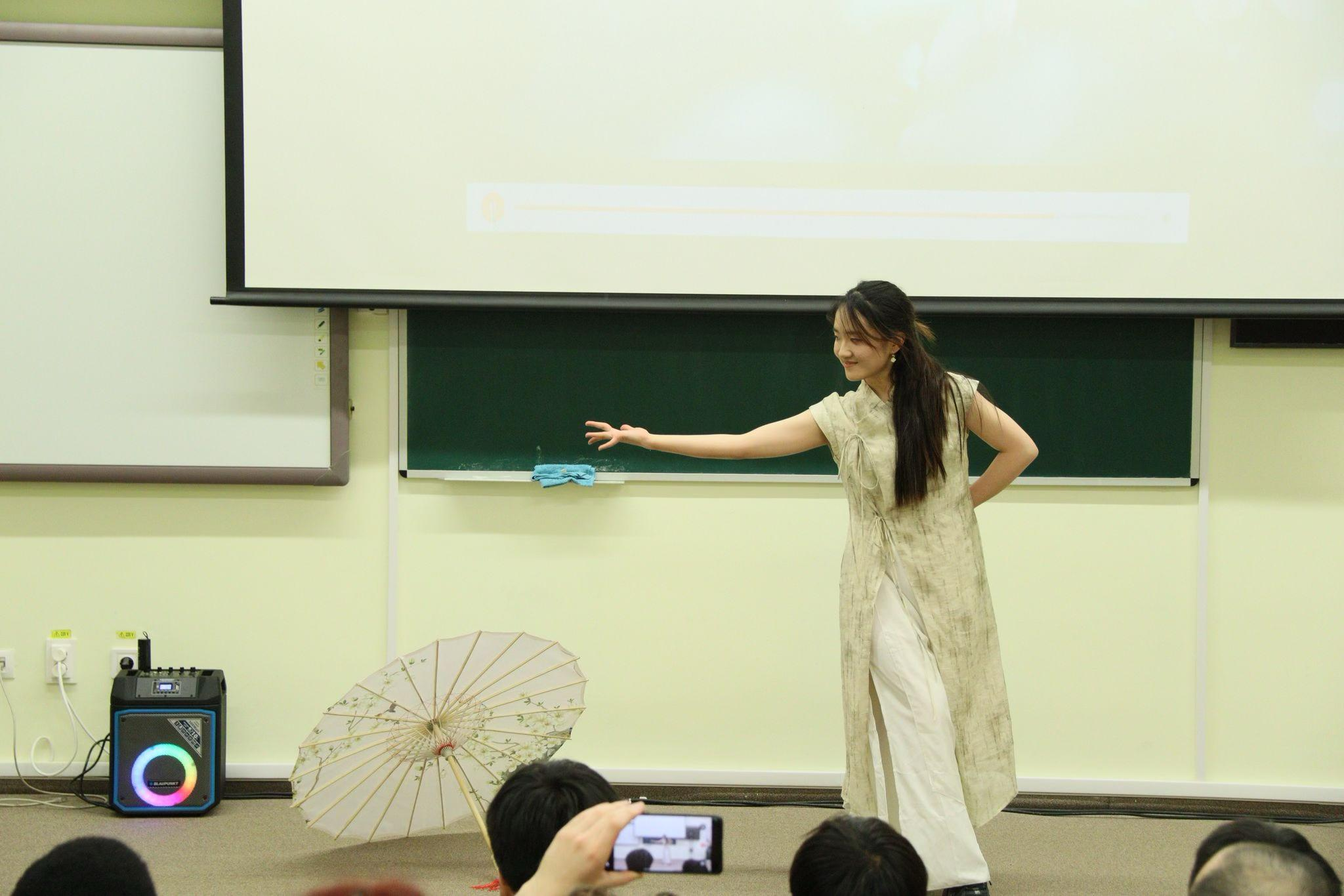
Following the instrumental performances, Bo Shengyi gave a detailed introduction to the aesthetic features, characteristic postures, and cultural meanings of traditional Chinese dance. She also demonstrated iconic hand gestures such as the “orchid fingers,” allowing the audience to directly experience the elegance and fluidity of Eastern dance aesthetics. After the explanation, Bo Shengyi performed the classical dance Boat Journey Through Misty Rain, enchanting the audience with graceful movements and poetic charm. Li Xinyi from Tongji Medical College then presented the classical dance Like a Dream, whose gentle and refined choreography vividly embodied the elegance of traditional Chinese dance.
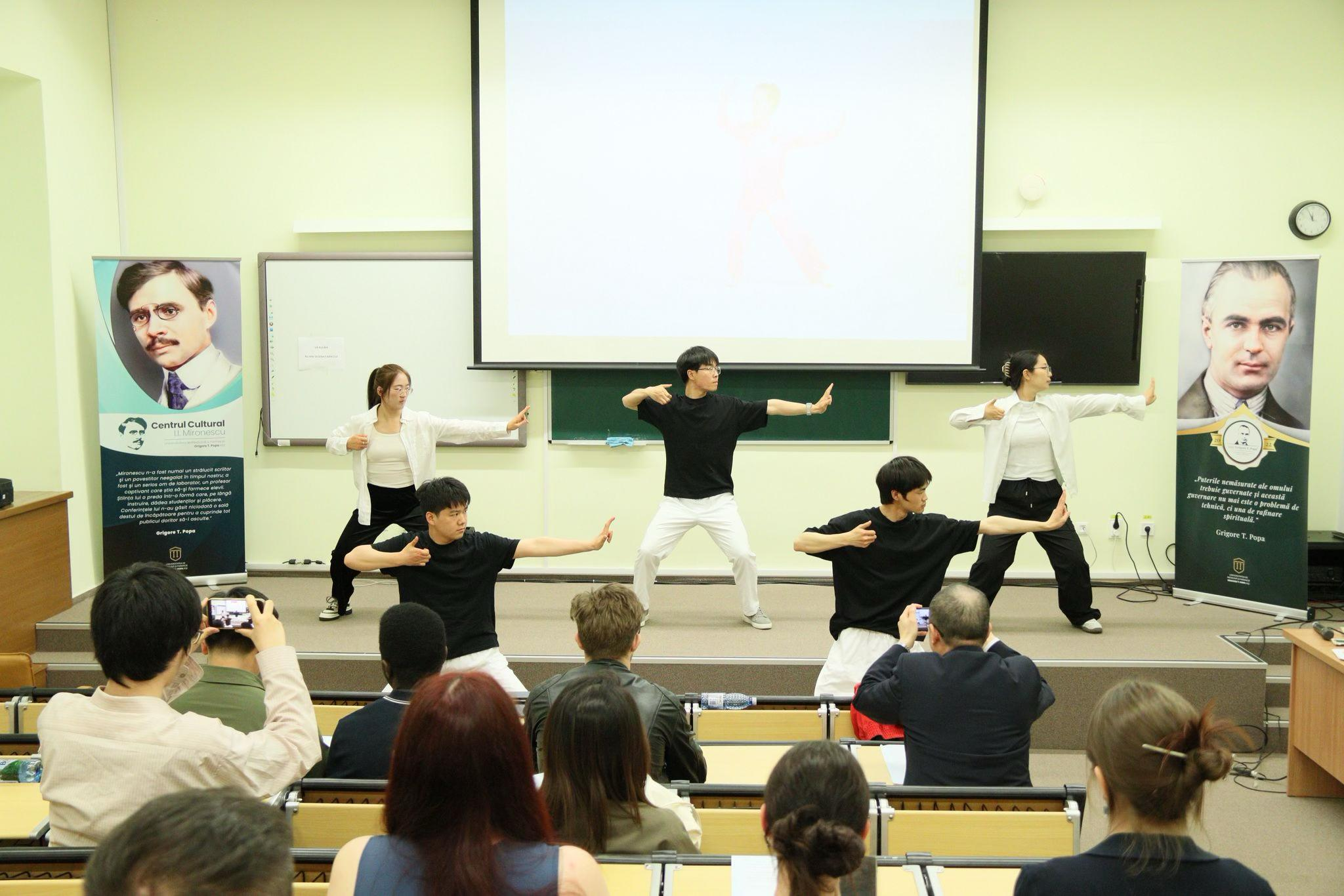
Finally, students from the Integrated Chinese and Western Medicine Program performed Baduanjin, the traditional Chinese fitness exercise, demonstrating both softness and strength while showcasing the unique appeal of Chinese wellness culture.Blending music, dance, and enthusiastic audience interaction, the event allowed participants to deeply appreciate the profound heritage and unique beauty of Chinese traditional arts amid elegant melodies and graceful movement.
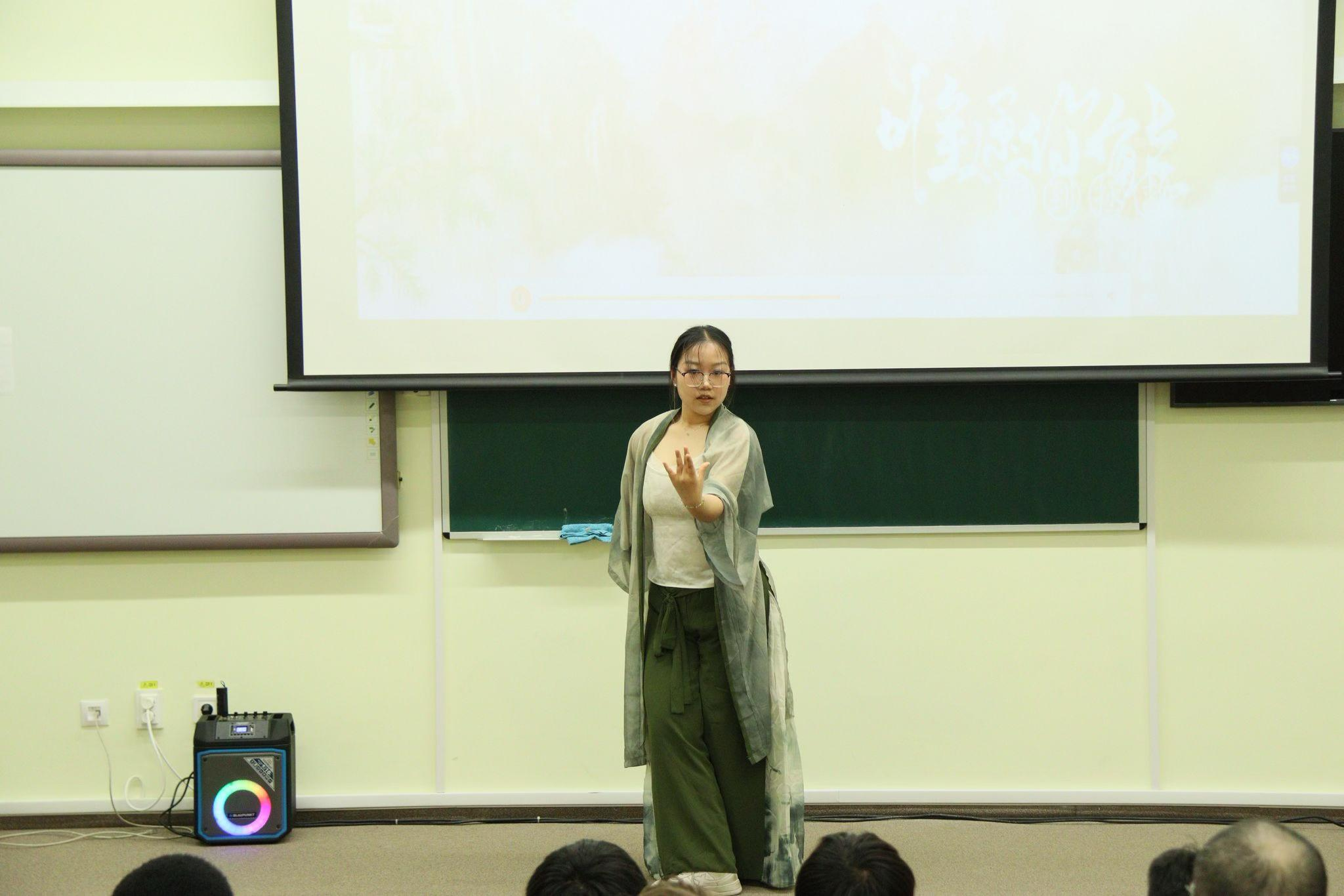
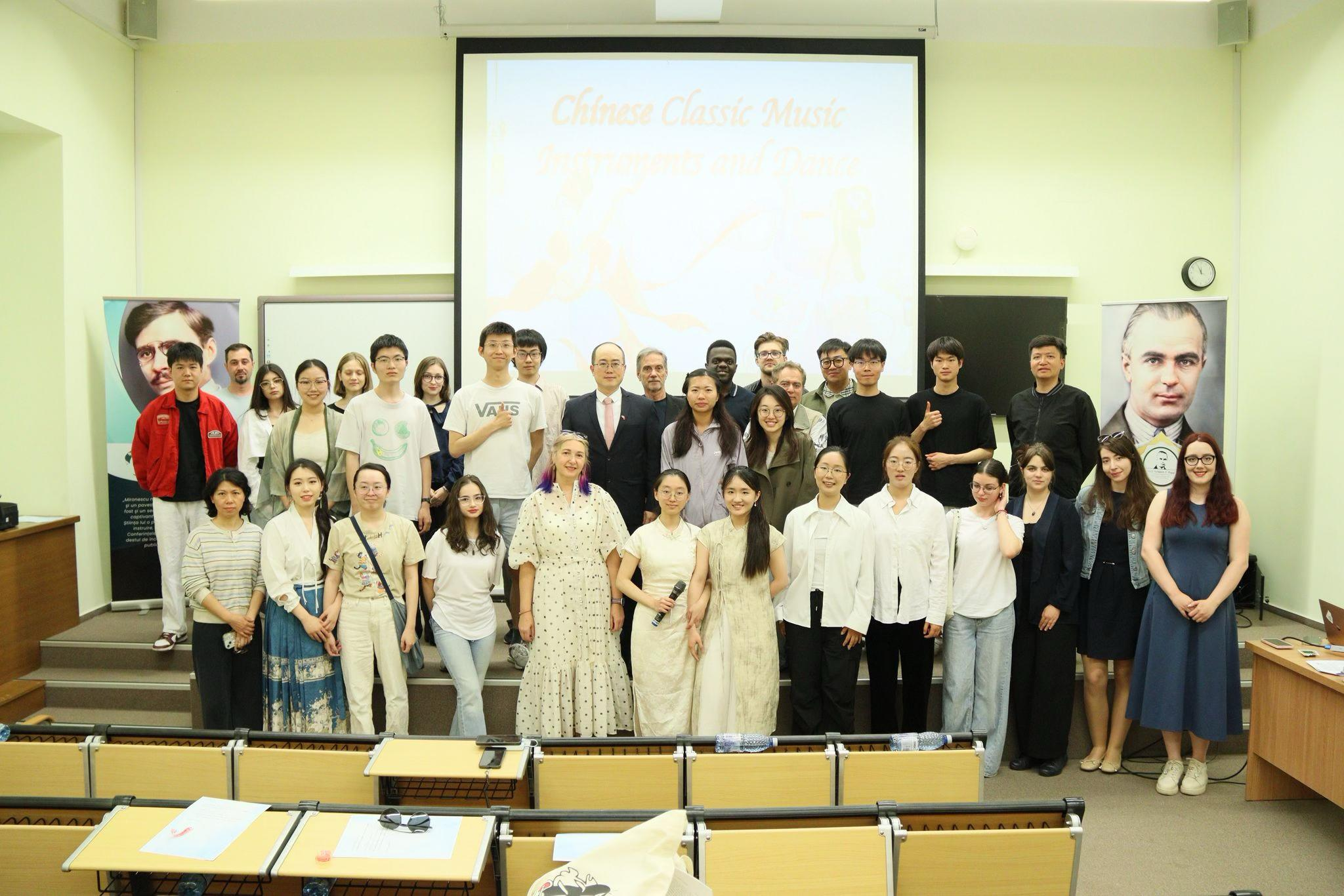
On the evening of May 21, the Hanfu-themed cultural event was warmly launched, with government-sponsored Chinese teacher Wei Leng serving as keynote presenter. As one of the most visually engaging and interactive events of the Culture Month, the showcase transformed the venue into a vibrant display of traditional Chinese aesthetics, as young participants dressed in flowing Hanfu garments became a beautiful sight throughout the hall.
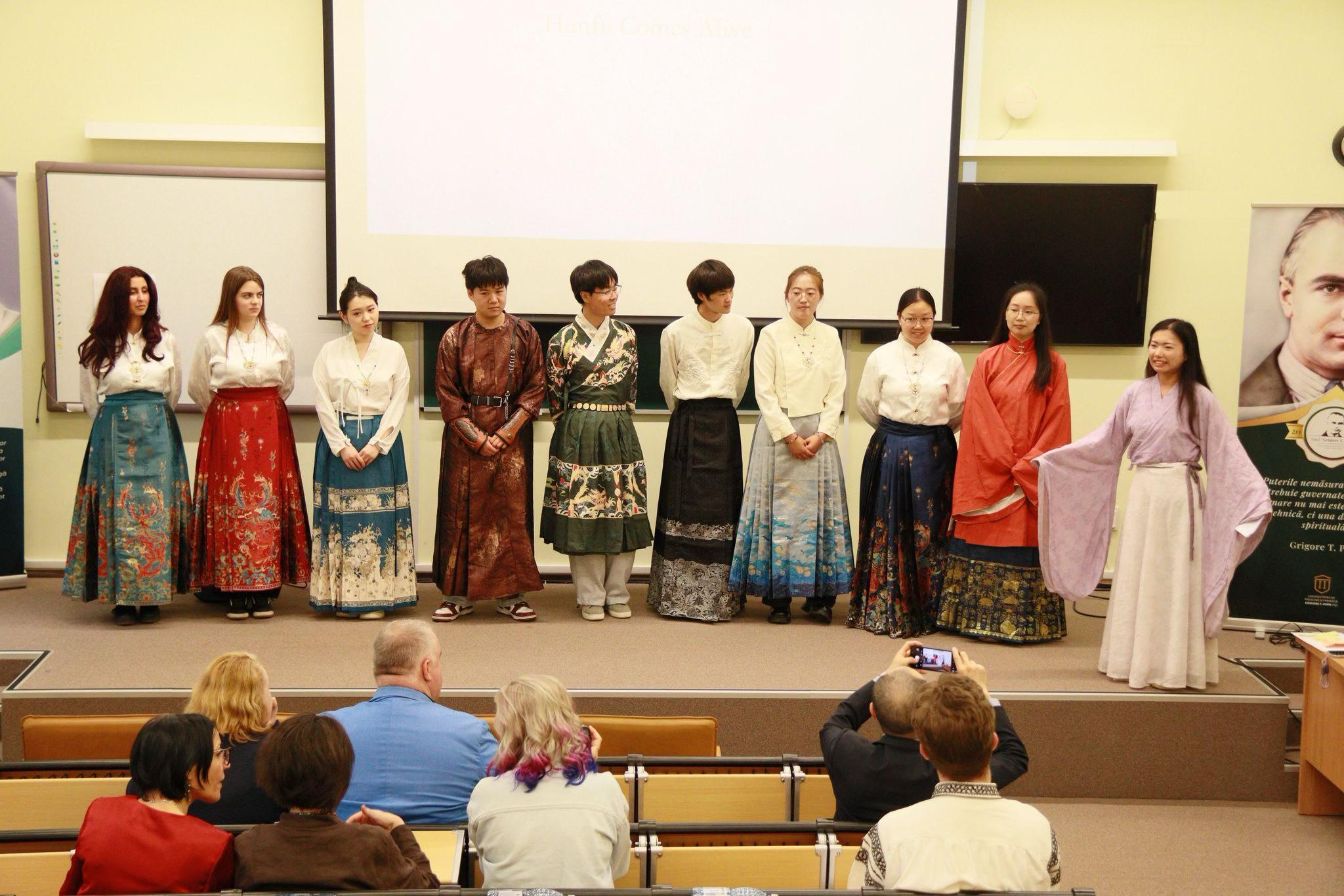
Using videos tracing the historical evolution of Hanfu, Wei Leng systematically introduced the development of traditional Chinese clothing and the distinctive styles of different historical periods. Through vivid and accessible explanations, the audience was guided on a journey through thousands of years of Chinese sartorial culture, gaining a deeper appreciation for its long history and unique aesthetic traditions. During the interactive session, interns from Tongji Medical College, Confucius Institute Chinese-language students, and international students appeared on stage wearing exquisite Hanfu from various dynasties. Wei Leng invited the audience to guess the historical periods represented by each outfit, and participants enthusiastically raised their hands to answer. The lively atmosphere helped deepen everyone’s understanding and memory of Hanfu history and stylistic features.
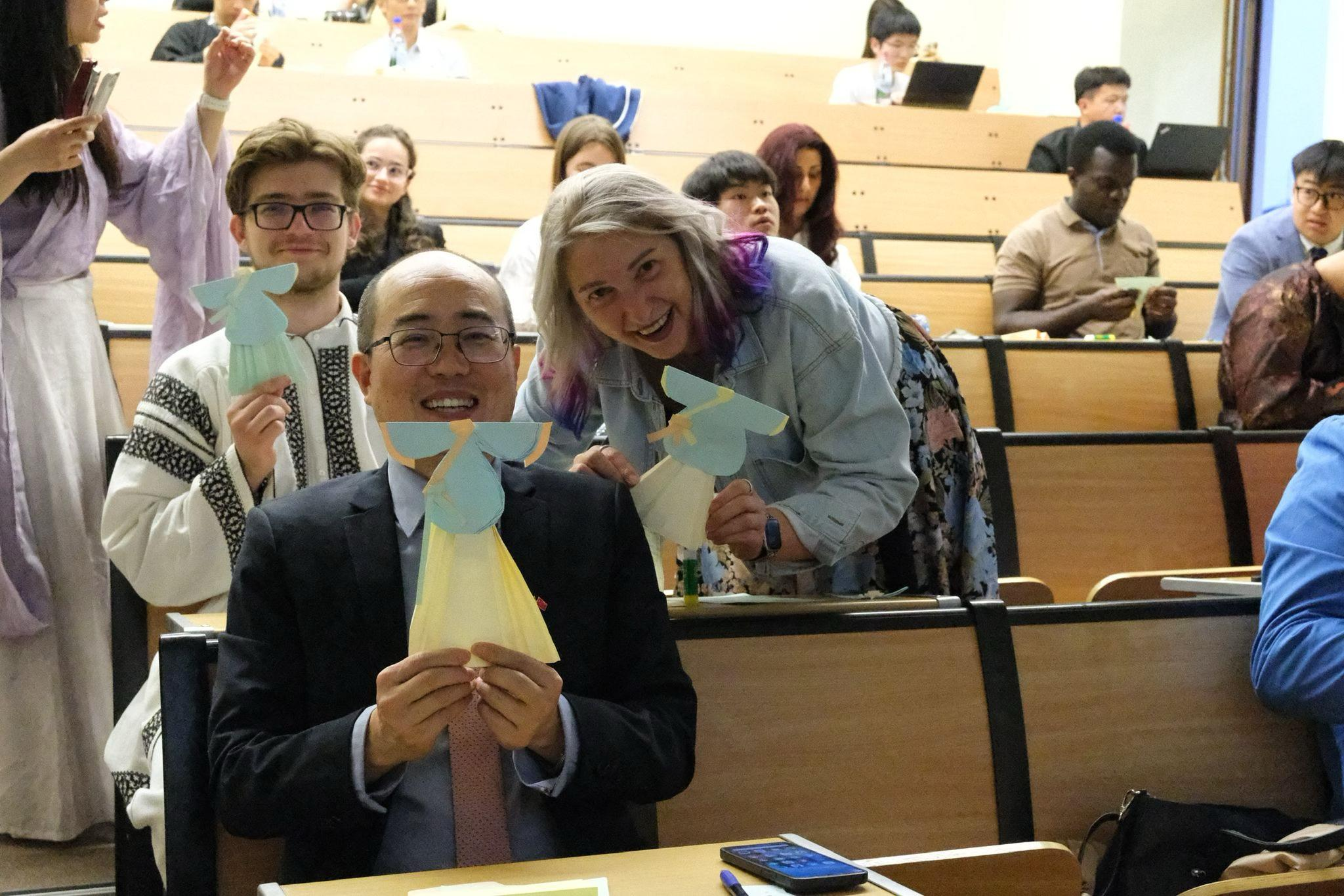
Afterward, Wei Leng led all participants in a hands-on paper-folding Hanfu workshop. Through the process of folding and creating miniature Hanfu designs, participants intuitively learned about the basic structure and artistic ingenuity of traditional Chinese clothing. The activity allowed everyone to engage personally with Hanfu culture, bringing Chinese traditional costume art into people’s hearts in a more vivid, approachable, and memorable way.
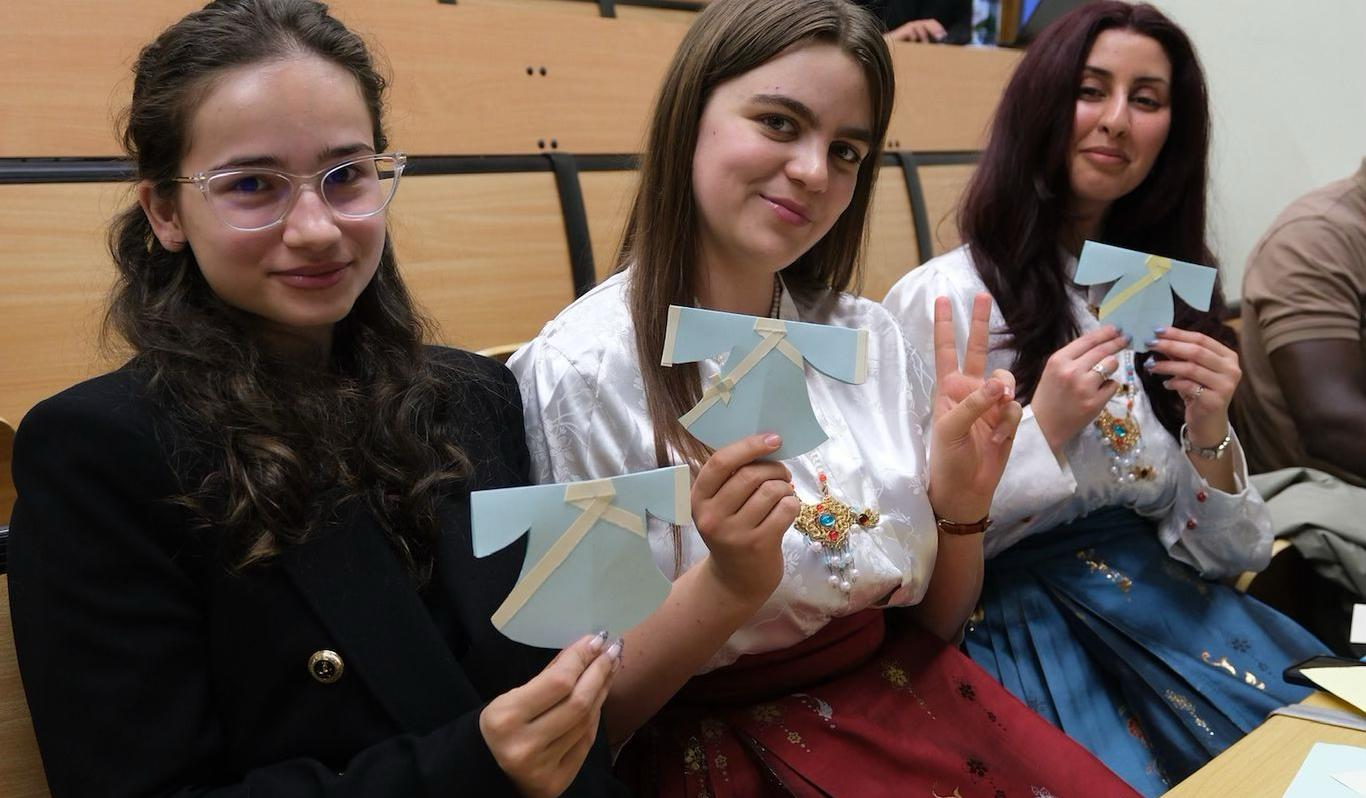
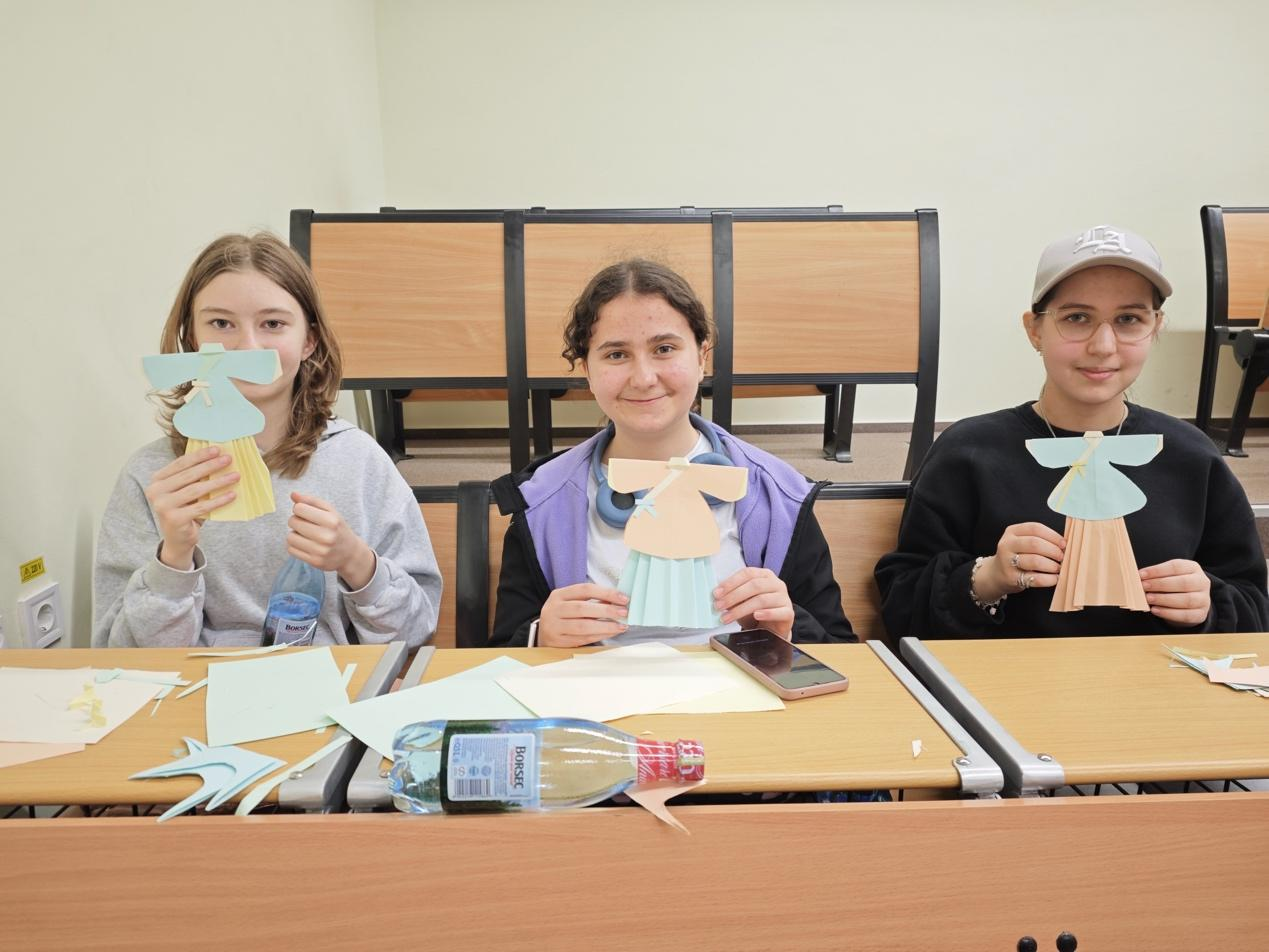
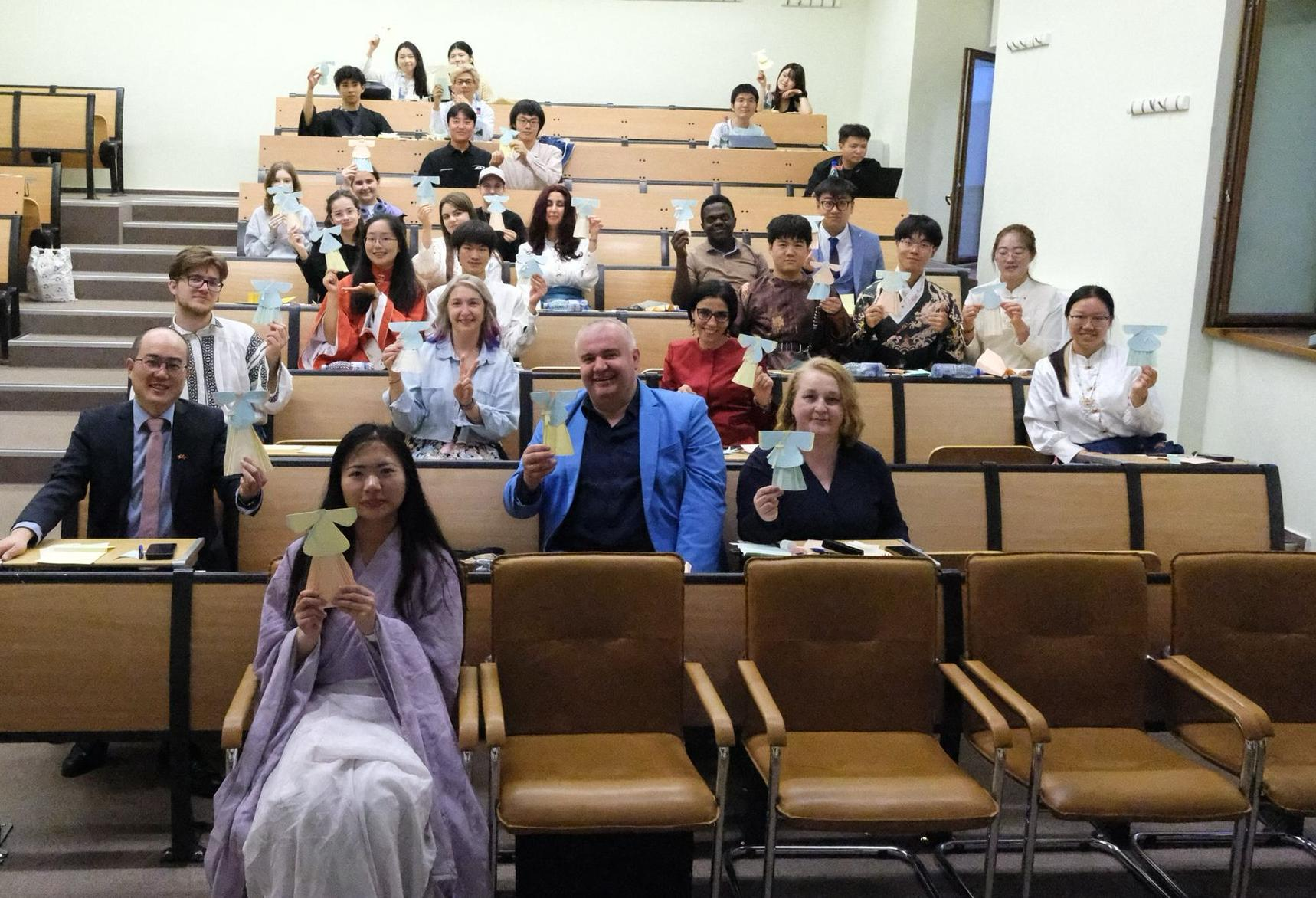
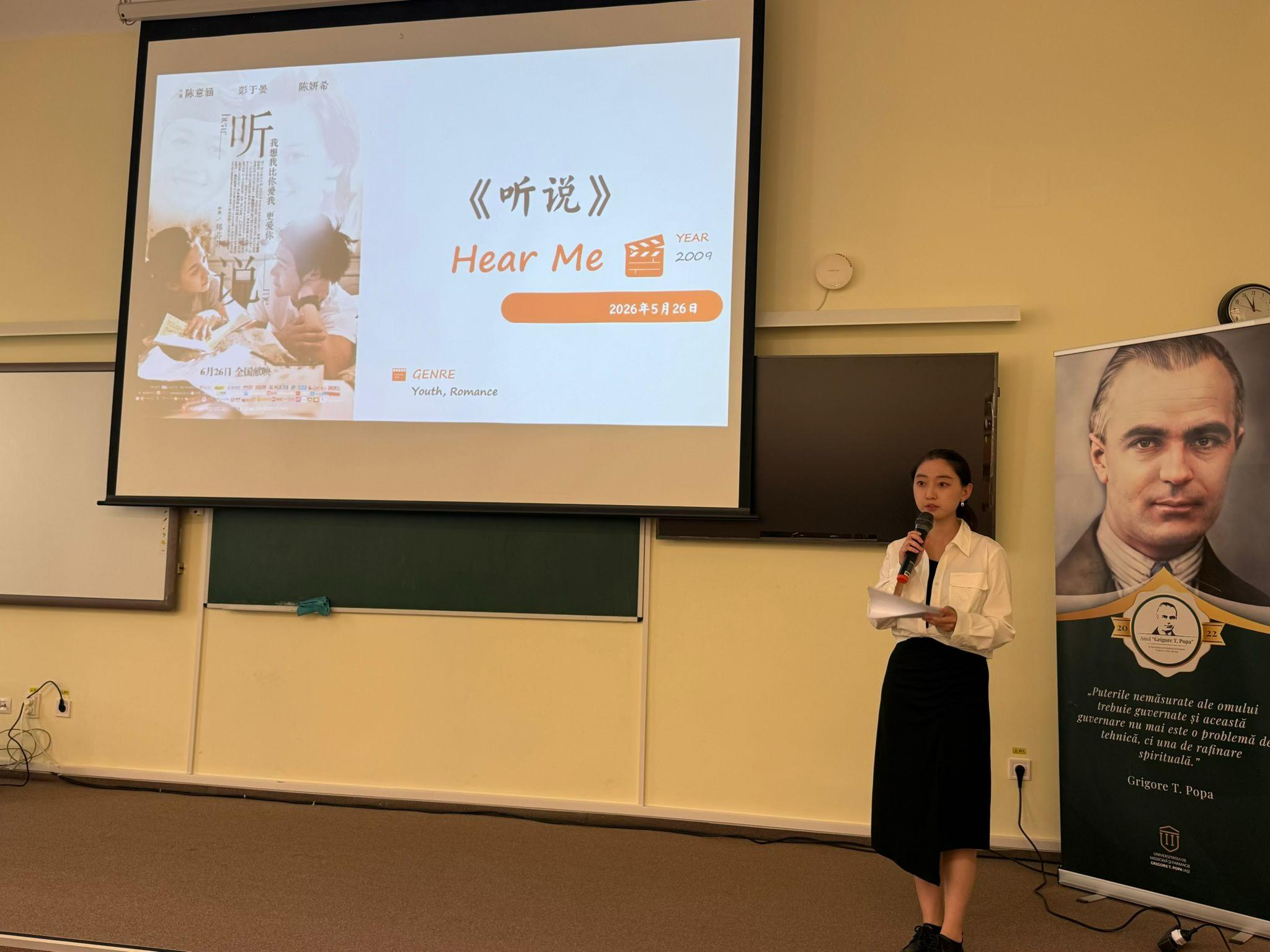
On the evening of May 26, the nearly month-long Chinese Culture Experience Month concluded successfully with a warm and moving film appreciation event. The featured film was the acclaimed Chinese movie Hear Me, hosted by volunteer teacher Liu Zhitong from Beijing Foreign Studies University.
At the beginning of the event, Liu introduced the topic of “verbal and nonverbal communication,” encouraging the audience to reflect on the expressive power of facial expressions, gestures, body language, and eye contact. She also highlighted the special significance of sign language as a unique form of nonverbal communication, while inviting participants to consider broader themes such as “family and dreams” before entering the world of the film.
Throughout the screening, the audience became deeply immersed in the film’s pure and heartwarming story. The silent acts of care, steadfast family affection, and sincere young love portrayed in the movie profoundly moved everyone present. At times, viewers smiled warmly at the humorous and touching scenes; at others, they were moved to tears by the selfless devotion between sisters and the quiet support shared among family members. Many audience members wiped tears from their eyes, completely absorbed in the film’s silent yet deeply powerful emotional world.
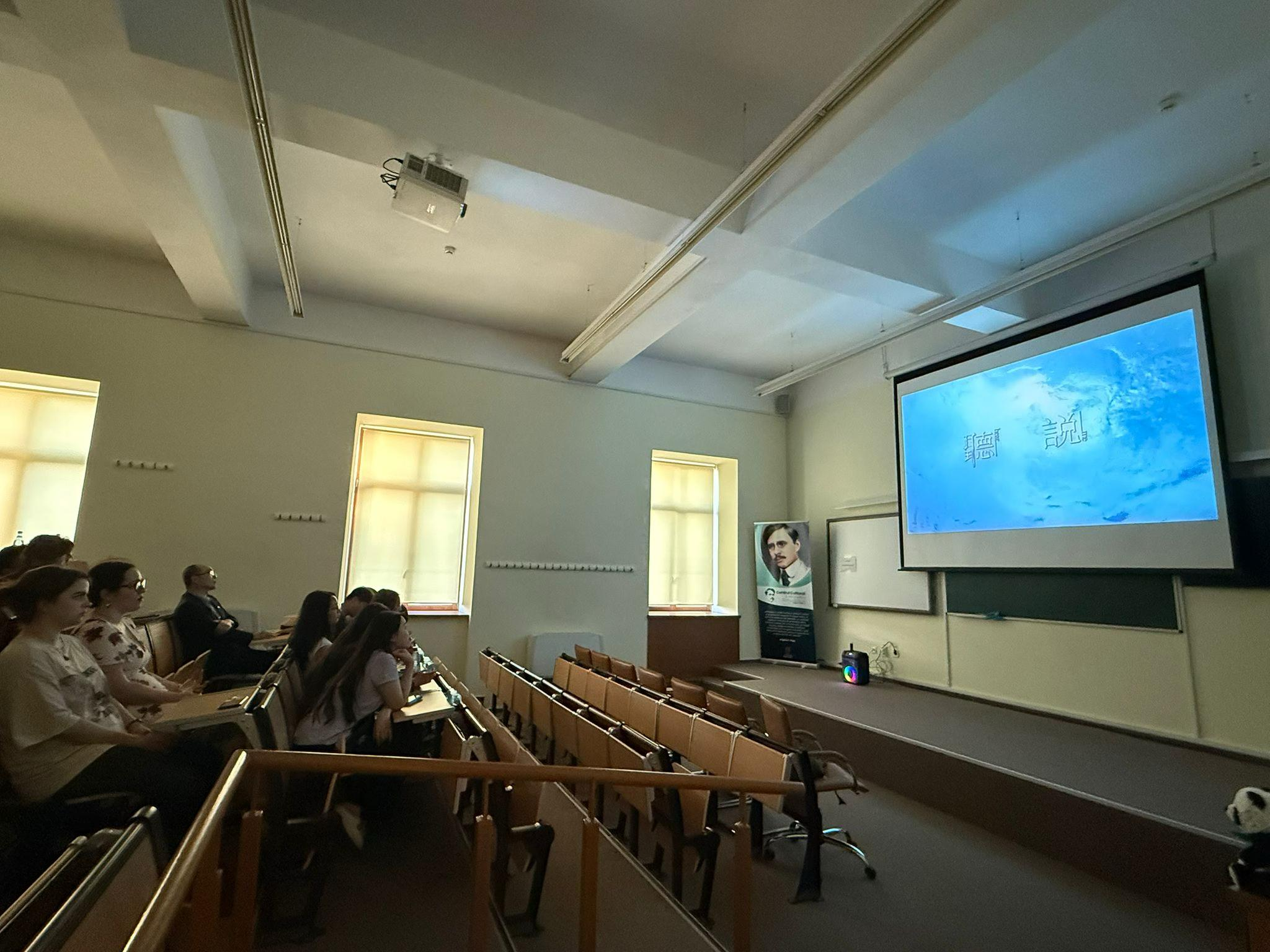
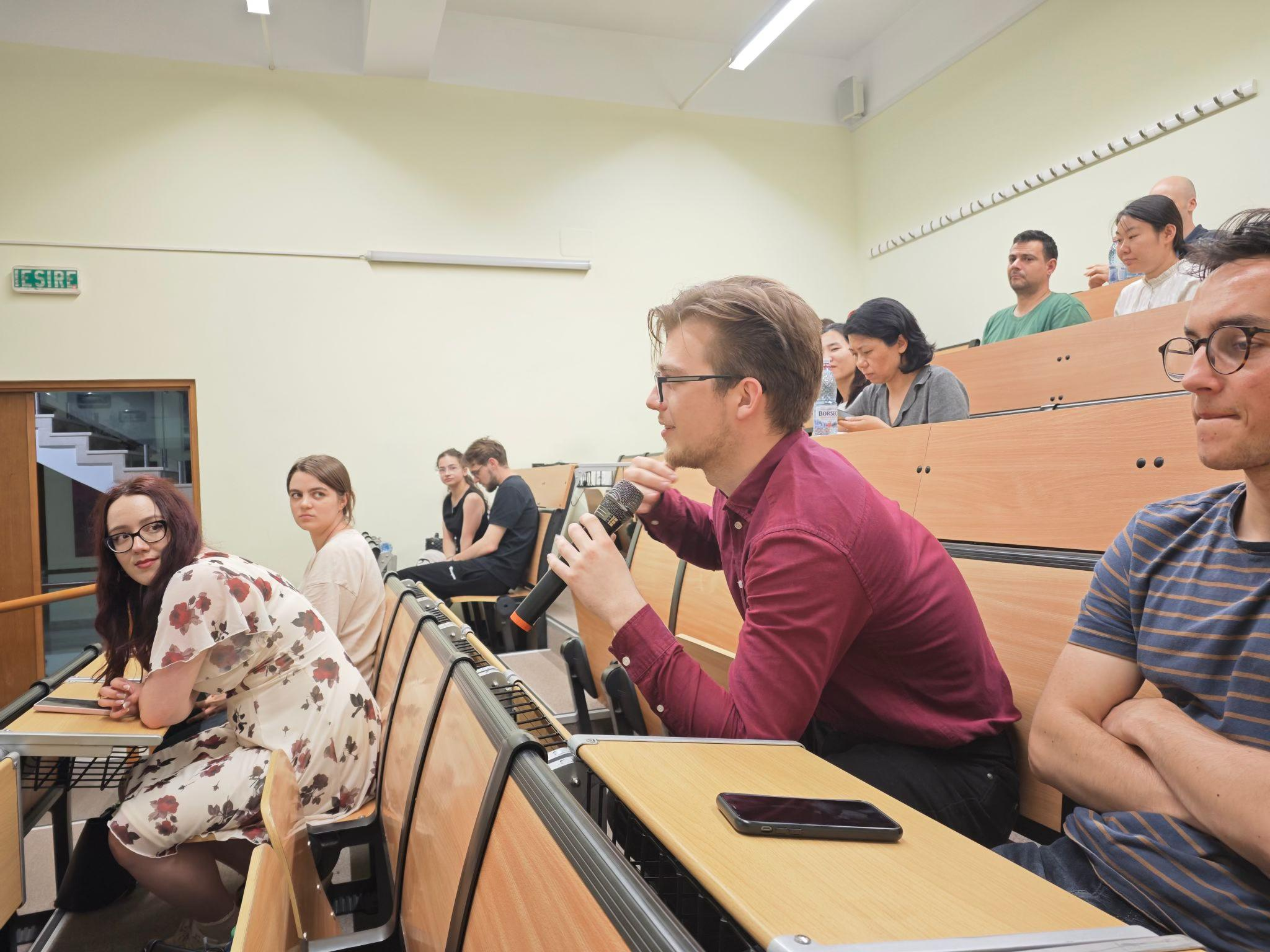
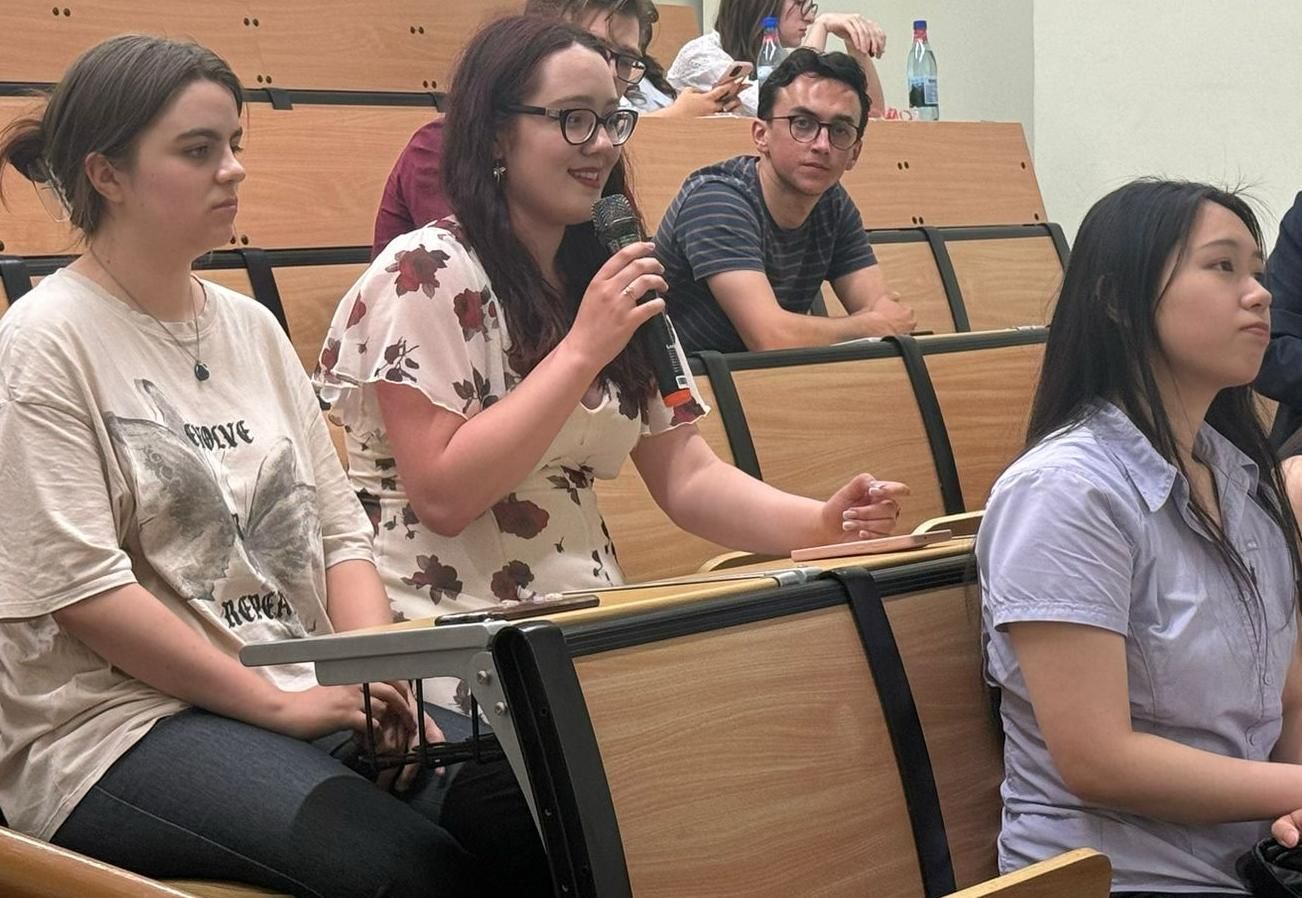
After the screening, the venue remained filled with emotion as the discussion session quickly turned heartfelt and passionate. The host introduced topics such as “favorite character” and “whether family members should share one another’s dreams and responsibilities.” Deeply touched by the film, students eagerly raised their hands to share personal stories about family, sacrifice, and emotional support. Some spoke about the sacrifices their families had made for them; others reflected on moments when they themselves had devoted everything to supporting loved ones. Many were especially moved by the bond between the sisters portrayed in the film. Their sincere and emotional sharing created an atmosphere of quiet but profound empathy throughout the room.
During the extended discussion, Chinese and Romanian students and teachers engaged in meaningful exchanges about similarities and differences in family values between the two cultures. Everyone agreed that, whether in China or Romania, family represents the strongest emotional support in life, and love and mutual care are universal values that transcend cultural boundaries. Traditional Chinese culture emphasizes unconditional support, mutual responsibility, and shared growth within the family, while Romanian culture likewise places great importance on family cohesion and emotional bonds. Both cultures strongly resonate in their shared values of loving, protecting, and sacrificing for one’s family, allowing participants to discover a powerful emotional connection through cultural dialogue. As the event concluded amid both emotion and reluctance to say goodbye, the friendships forged between the Chinese and Romanian participants through cultural exchange grew even deeper and more enduring.
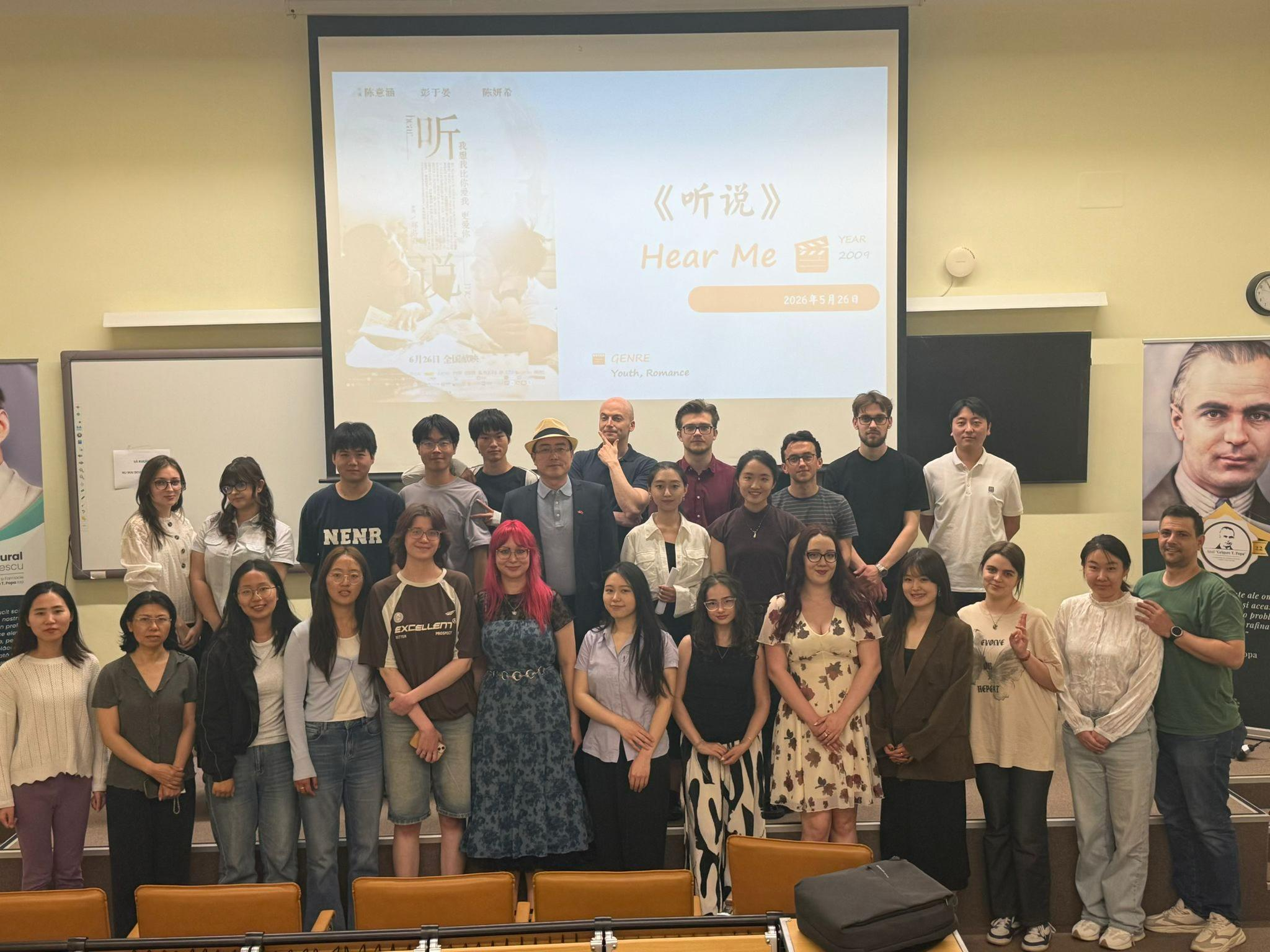
celebration of Chinese civilization, but also a heartfelt dialogue that transcended distance and touched people deeply. As the Chinese saying goes, “True friendship knows no distance; even thousands of miles apart, we remain close neighbors.” The power of culture surpasses language and national boundaries, bringing the peoples of China and Romania ever closer through mutual learning and exchange. From the intellectual resonance found in proverbs, to the poetic beauty of songs and classical verse; from the elegant charm of traditional music and dance, to the timeless grace of Hanfu; from the emotional warmth of cinema, to the sincerity of open cultural dialogue — Romanian audiences experienced firsthand the warmth, depth, and richness of Chinese culture through immersive participation, while also discovering the simple yet profound emotional connection shared between the peoples of China and Romania.
Building upon the success of this Culture Experience Month, the Confucius Institute at Grigore T. Popa University of Medicine and Pharmacy in Iași will continue to use culture as a bridge and language as a bond, constantly innovating its activities and enriching cultural exchange. The Institute remains committed to promoting deeper people-to-people connections, youth engagement, and mutual civilizational learning between China and Romania, ensuring that Chinese culture continues to flourish abroad and that the traditional friendship between the two countries grows ever stronger through cultural exchange.