

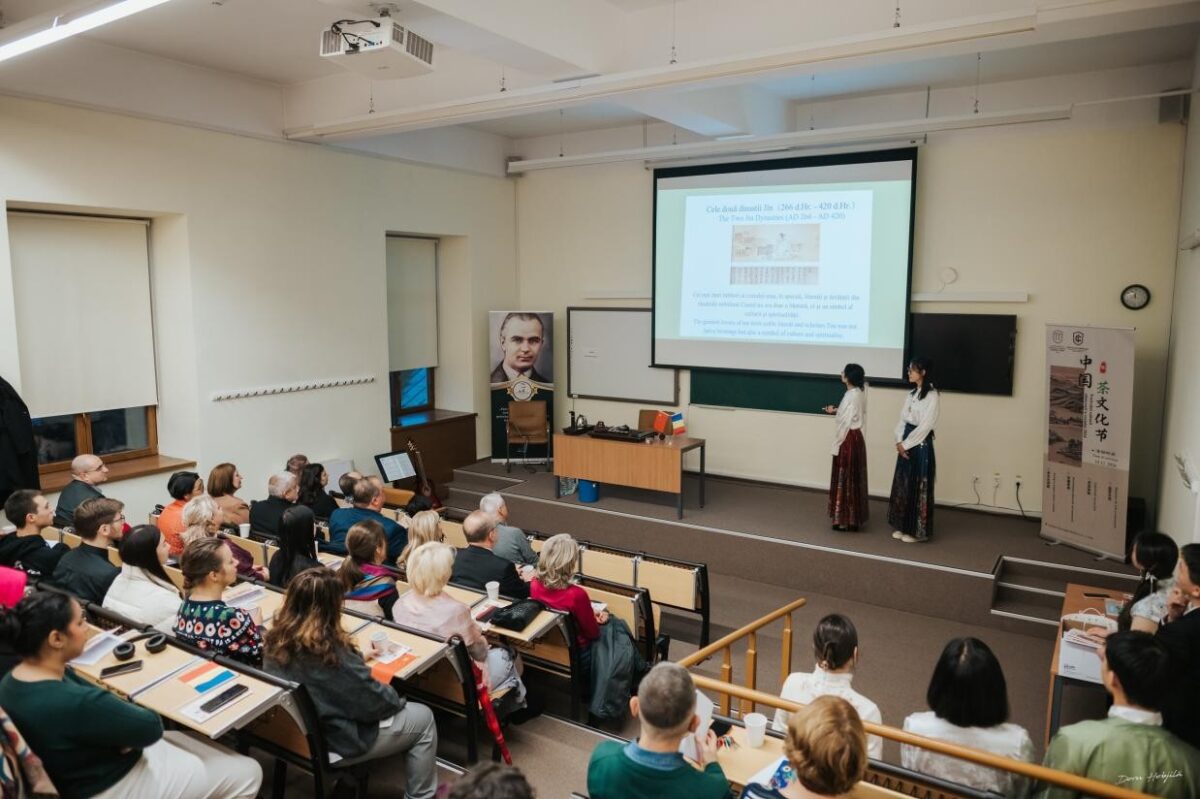
On December 10, a captivating Chinese Tea Culture Festival, blending elegance and charm, was grandly held at the University of Medicine and Pharmacy “Grigore T. Popa” from Iași, Romania. The Confucius Institute welcomed guests with tea, fostering friendships and cultural exchange in a unique way. This event, dedicated to showcasing the beauty of traditional Chinese culture, attracted nearly a hundred international students, faculty members from various universities in Iași, and local residents.
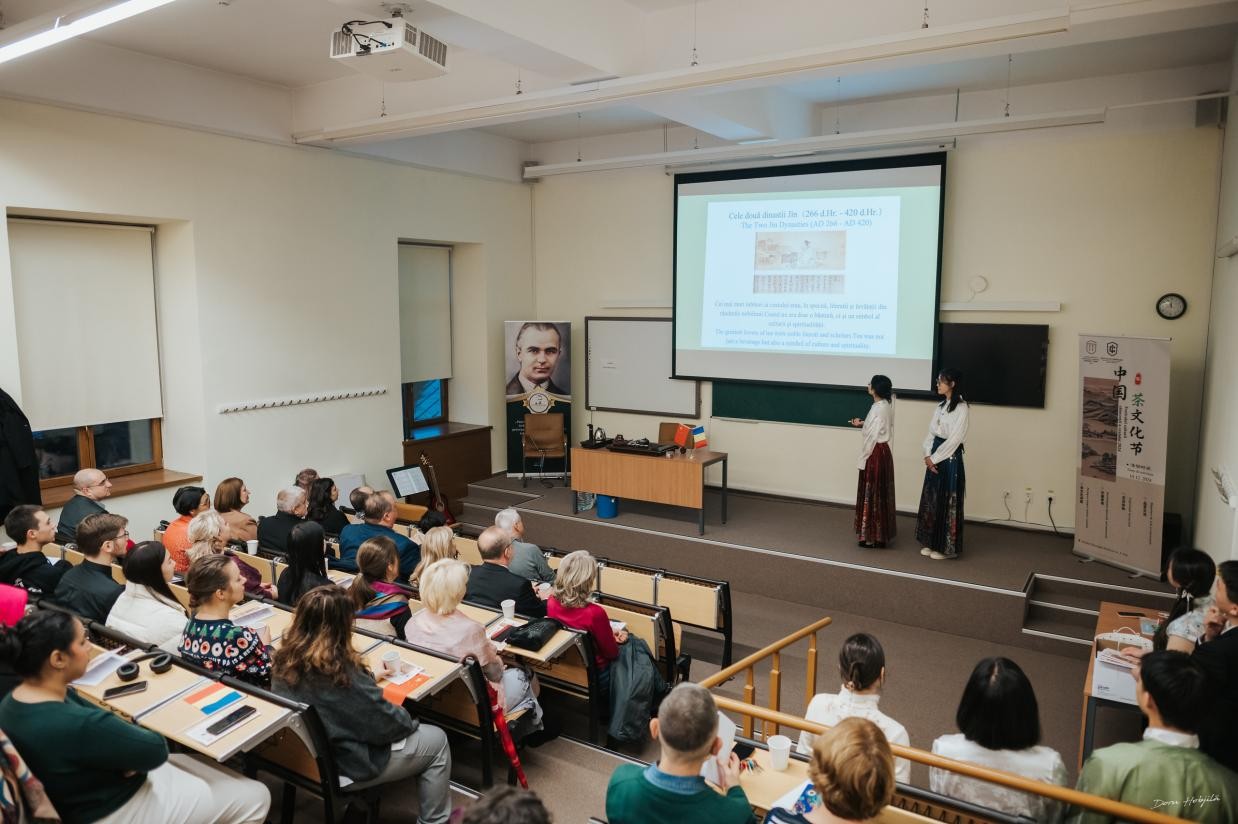
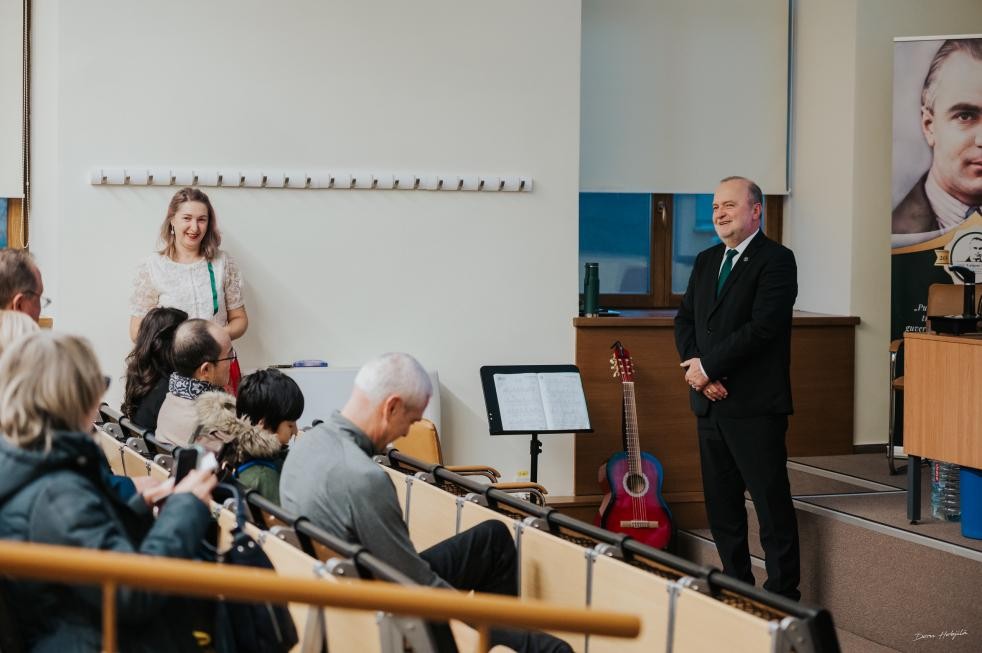
The event was hosted by the foreign director of the Confucius Institute, Mrs. Gabriela.Cuciurianu, and commenced with a speech by the university’s rector, Professor Viorel Scripcariu. In his address, Professor Viorel Scripcariu highlighted that this was the first Chinese cultural promotion event since the establishment of the Confucius Institute, making it a significant part of the university’s 145th-anniversary celebrations. He expressed his hope that through this event, students and faculty members in Iași would gain a deeper understanding of Chinese tea culture, appreciate its role as a bridge in international exchanges, and be inspired to learn Chinese and explore Chinese culture further.
The highlights of the event were a lecture on Chinese tea culture and a traditional tea ceremony demonstration. Young Sinologists Wang Zichang and Lu Shan from Alexandru Ioan Cuza University delivered an engaging presentation in Romanian and English, narrating the history, characteristics, and etiquette of Chinese tea culture. They also demonstrated the intricate process of brewing traditional Chinese tea. Dressed in exquisite Han-style “Mamian” skirts with elegant headpieces, their fluent multilingual presentation, graceful demeanor, and precise gestures captivated the audience, embodying the charm of Eastern femininity.
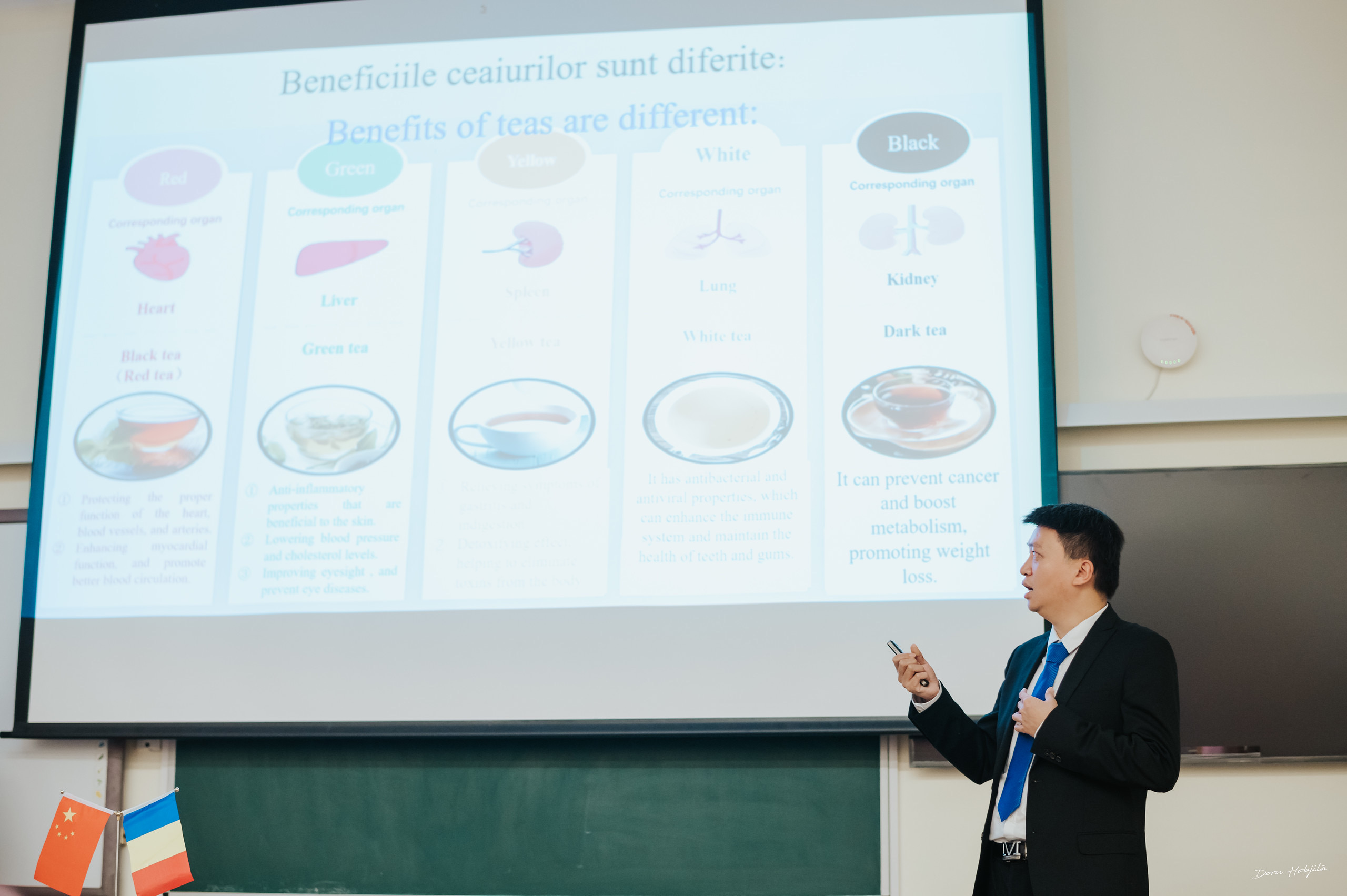
Their lecture vividly traced the historical journey of tea from the Ancient Tea Horse Road to the Tea Classic by Lu Yu, from the nomadic tea traditions to the Maritime Silk Road, unveiling the deep cultural roots of Chinese tea. As they performed the tea ceremony, the aroma of tea filled the room, enchanting the audience. Additionally, TCM instructor Xu Xiaohu provided insights into the health benefits of tea from the perspective of traditional Chinese medicine, aligning with the university’s anniversary theme and introducing Western medical experts to the wellness philosophies of Chinese tea culture.
With a theme centered on traditional Chinese aesthetics, all Confucius Institute teachers and volunteers wore a variety of elegant Hanfu and Qipao, adding a touch of cultural authenticity to the event. On stage, they delivered mesmerizing performances: all teachers and volunteers sang the popular Chinese song Later, with Chinese Director Chen Gong playing the guitar accompaniment; Chinese language volunteer teacher Zhao Ying captivated the audience with a soulful Pipa solo, her melodies resonating with timeless beauty.
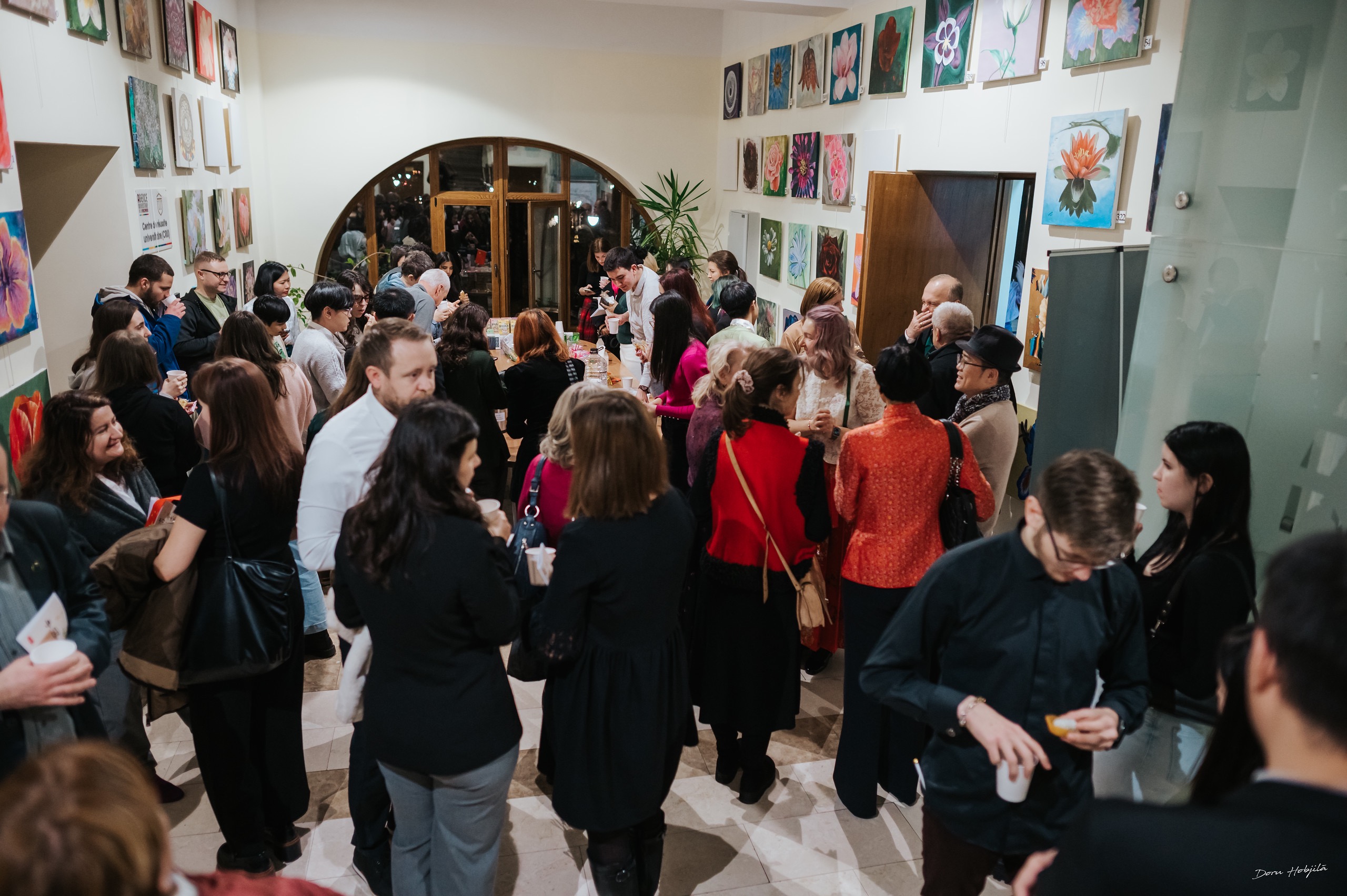
To engage attendees further, an interactive quiz on Chinese and European culture drew enthusiastic participation, with winners receiving exquisite gifts. Meanwhile, guests enjoyed traditional Chinese snacks and an immersive tea-tasting experience, savoring freshly brewed teas of various flavors. The meticulously crafted tea culture handbook prepared by the Confucius Institute deepened participants’ appreciation for tea culture. As students, faculty, and locals gathered, immersed in this cultural exchange, the delicate aroma of tea lingered, symbolizing a harmonious fusion of traditions.
That evening, tradition and modernity intertwined, the East and West converged, painting a magnificent cultural tapestry. This event not only served as a dazzling platform for showcasing and promoting Chinese culture but also provided immense inspiration and encouragement for the newly established Confucius Institute. Looking ahead, the Confucius Institute at the University of Medicine and Pharmacy “Grigore T. Popa” from Iași remains committed to its mission, planning more cultural events to foster deeper cross-cultural connections and write a new chapter in cultural exchange and development.