
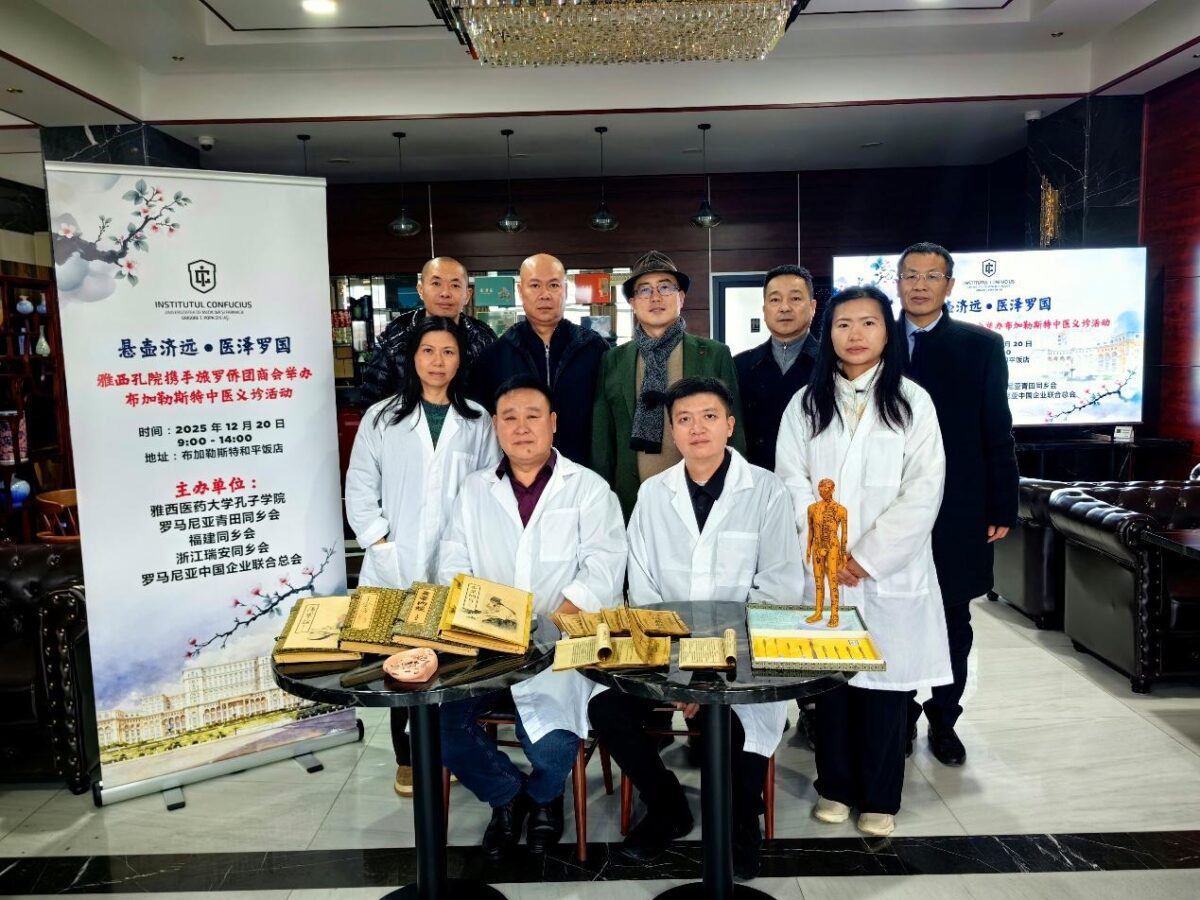
On December 20, a free TCM clinic event themed “Serving Distant Lands and Benefiting Nations” was successfully held at the Peace Hotel in Bucharest, the capital of Romania. This event was jointly organized by the Confucius Institute at “Grigore T. Popa” University of Medicine and Pharmacy from Iași (hereinafter referred to as “Iași Confucius Institute”), the Romanian Qingtian Association, the Fujian Association, the Zhejiang Ruian Association, and the Romanian China Enterprise Federation. It aims to provide high-quality TCM public services for Chinese expatriates in Romania and local residents, promote traditional Chinese medical culture, and enhance cultural exchanges and mutual understanding between China and Romania.
Chen Gong, the Chinese director of the Iași Confucius Institute, Ye Yangjun, president of the Romanian Qingtian Association, Executive Vice President Zhang Gaoyi, Zheng Xing, president of the Fujian Association, Secretary-General Weng Xingbin, Executive Vice Presidents Chen Huai and Chen Yuting, Ruan Lifei, president of the Zhejiang Ruian Association, Executive President Zhang Dongmin, Financial Director Cai Fengyi, Executive Vice Presidents Yang Zhengbang and Yang Zhengxi, Chen Guojing, president of the Romanian China Enterprise Federation, Vice President Chen Songhua, and Zeng Xudong, director of the European Times office in Romania, attended the event.
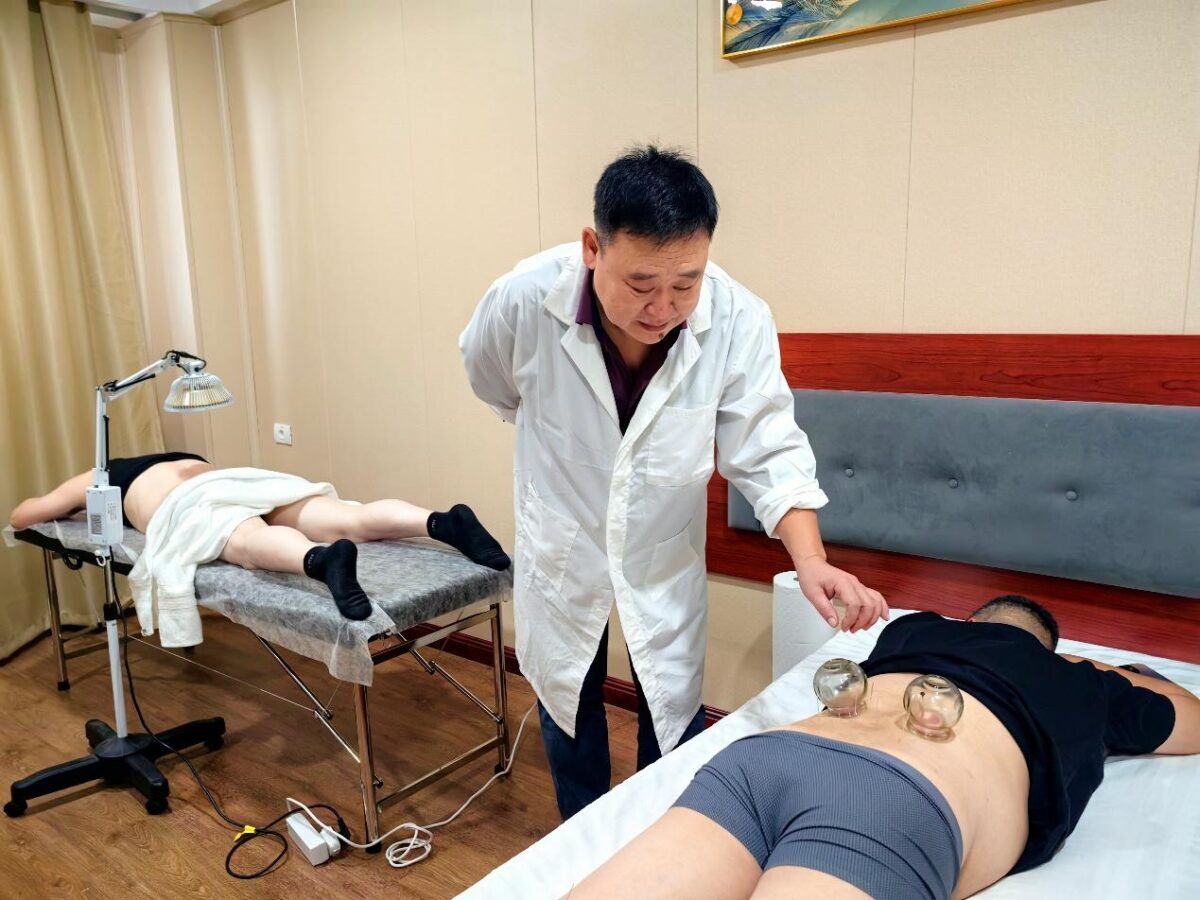
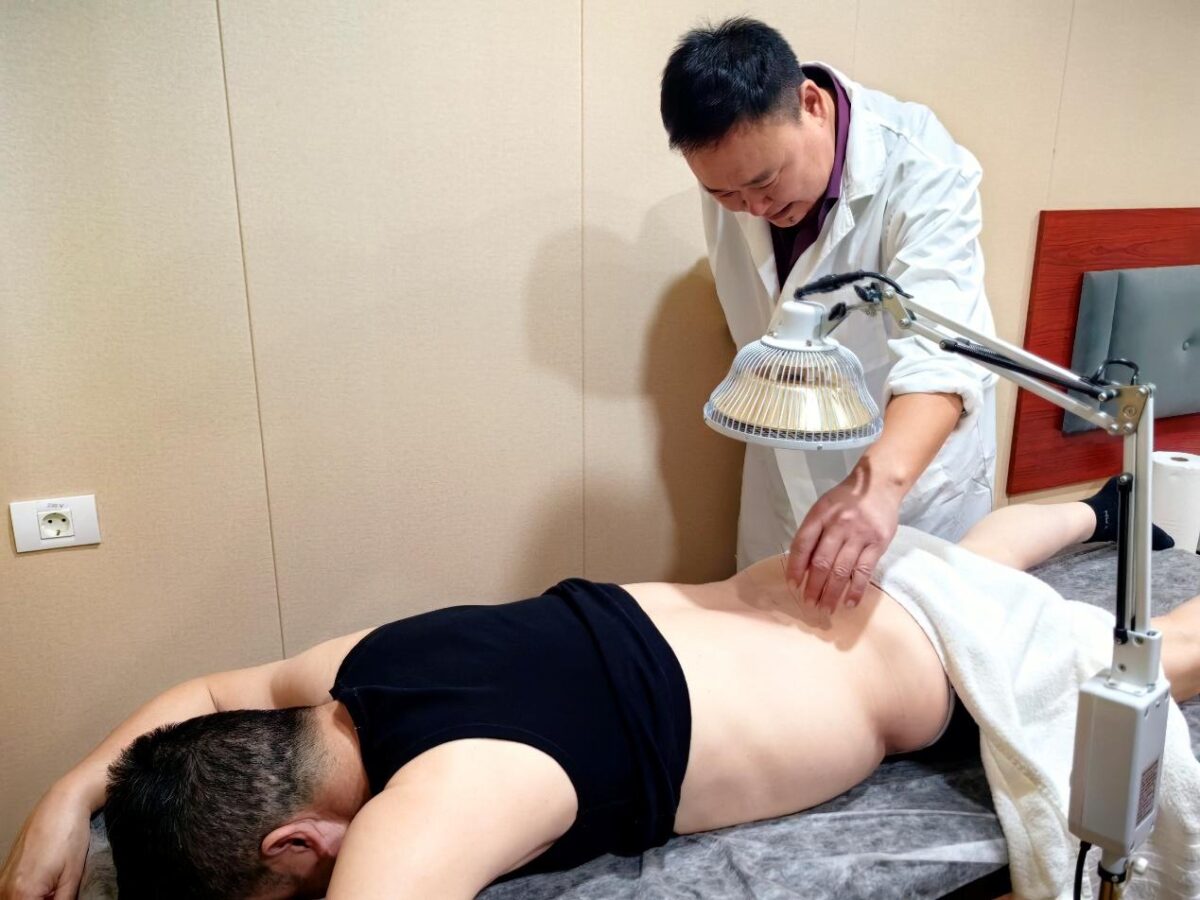
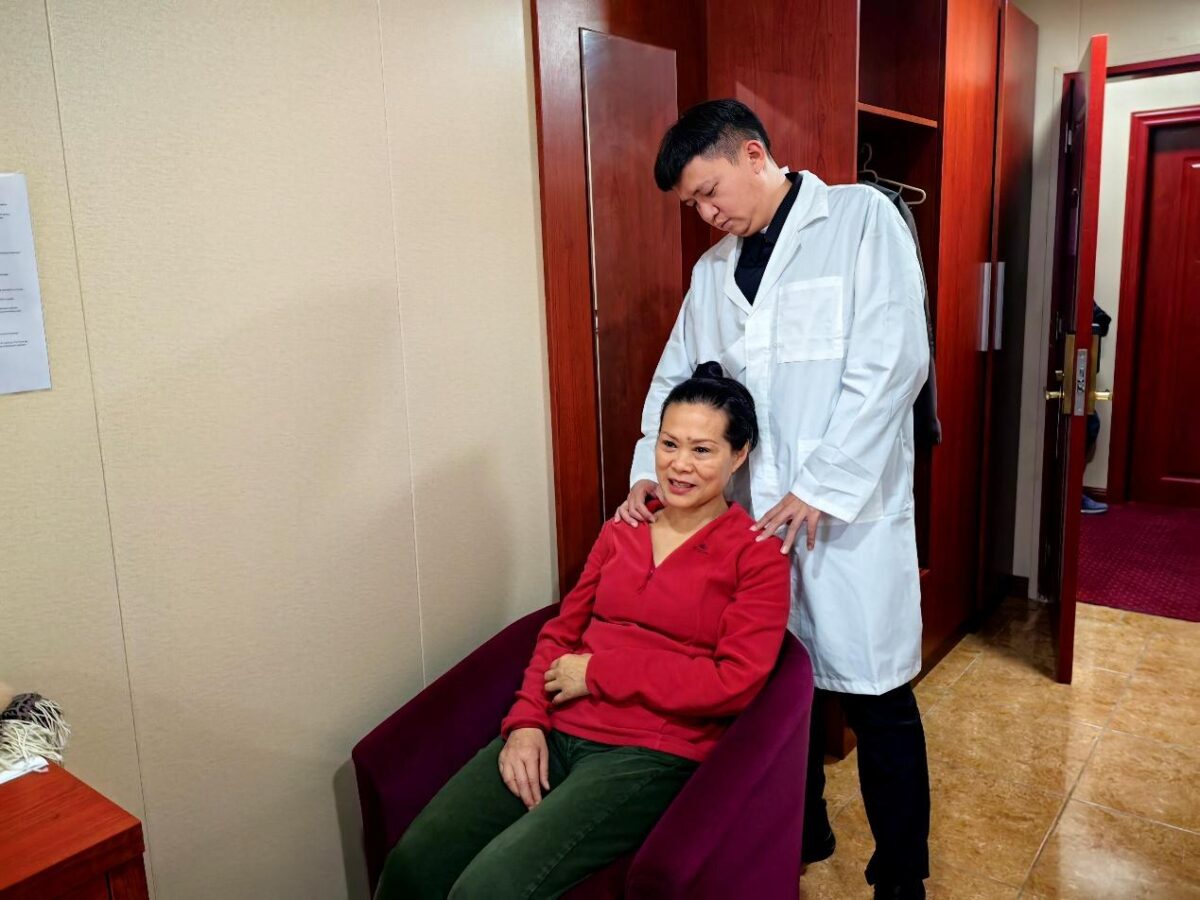
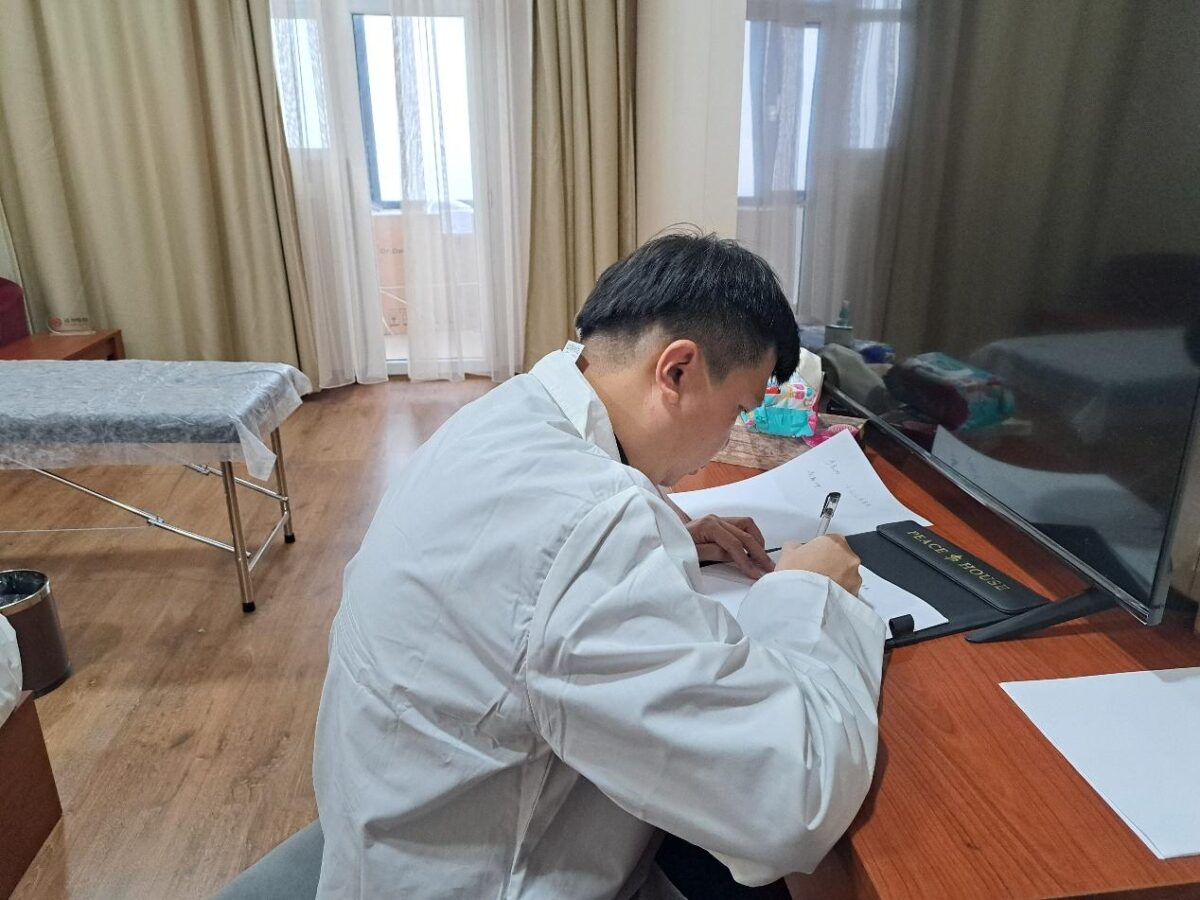
At 9 a.m., a long queue had formed orderly at the free clinic site. Two veteran TCM experts—Dr. Xu Xiaohu, deputy chief physician of Tongji Hospital affiliated with Huazhong University of Science and Technology and a public-appointed TCM teacher from Iași Confucius Institute, and Dr. Xu Huizhong, vice president of the Romanian China Enterprise Federation and president of its TCM Health and Wellness Branch—provided professional TCM diagnosis and health guidance to the public seeking consultation. Through TCM diagnostic methods such as observation, auscultation and olfaction, inquiry, and palpation, the two doctors offered participants health consultations, blood glucose and blood pressure measurements, TCM syndrome differentiation and prescription, and guided them to personally experience TCM external treatment techniques including Tongbian Gua Sha, Auricular Five-Point Therapy, cupping, moxibustion, and fire dragon cupping.
The free clinic lasted until around 3 p.m., with a steady stream of patients arriving, including both Chinese expatriates and local Romanian residents. Everyone received satisfactory prescriptions and experienced the wonders of traditional Chinese medicine (TCM) up close. Particularly, two Romanian friends who were new to TCM praised the profound depth and unique efficacy of TCM culture after receiving diagnosis and treatment. According to statistics, Deputy Chief Physician Xu Xiaohu issued over twenty TCM prescriptions, while Dr. Xu Huizhong provided treatments using acupuncture, cupping, and other TCM techniques for nearly twenty Romanian expatriates and friends. This event not only effectively met the publics health needs but also vividly promoted the traditional TCM culture of China, further bridging the emotional gap between the people of China and Romania.
After the free medical consultation, the Confucius Institute of Iași Medical University held a symposium with representatives of various Romanian Chinese associations. Both sides engaged in in-depth discussions and exchanges on topics such as the dissemination of traditional Chinese medicine culture in Romania and long-term cooperation mechanisms, and reached preliminary consensus on resource sharing and the expansion of public welfare medical services. The participants unanimously agreed that such activities effectively address the health concerns of overseas Chinese and local residents, providing a platform for the public to closely understand traditional Chinese medicine knowledge and experience its charm. This helps deepen the publics recognition of the wisdom of traditional Chinese medicine and the concept of “Healthy China,” injecting lasting momentum into Sino-Romanian cultural exchanges and people-to-people connectivity.