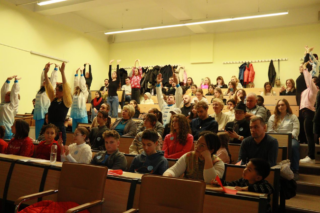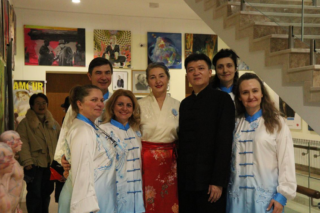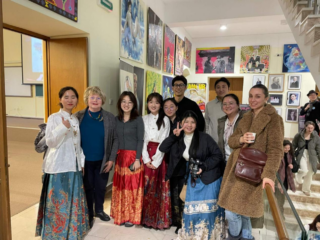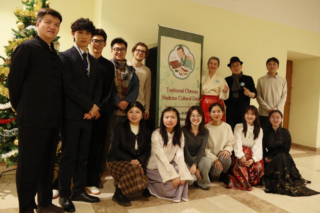


On December 13, 2025, the Confucius Institute at the “Grigore T. Popa” University of Medicine and Pharmacy in Iași successfully held a “Traditional Chinese Medicine Cultural Day” event. This activity aimed to provide an opportunity for students and faculty of the university, as well as local residents, to gain a closer understanding of Traditional Chinese Medicine (TCM) and experience the charm of its culture, promoting the spirit of national medicine and enhancing health collaboration between China and Romania. The event attracted over 100 participants.
The afternoon program began at 2 PM with a warm welcome in the open area of the Confucius Institute. An impressive welcome display and TCM-themed exhibition greeted attendees at the entrance, where a registration desk provided exclusive “I ❤️ TCM” commemorative stickers and pens, allowing each participant to leave a mark and cherish this beautiful memory. The institute’s office carefully displayed classic TCM books, acupuncture models, and medical tools for guests to observe up close, while a promotional video on TCM culture was played in the auditorium, creating a rich cultural atmosphere and opening up a journey into TCM.
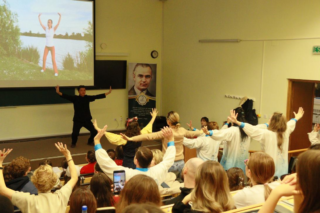
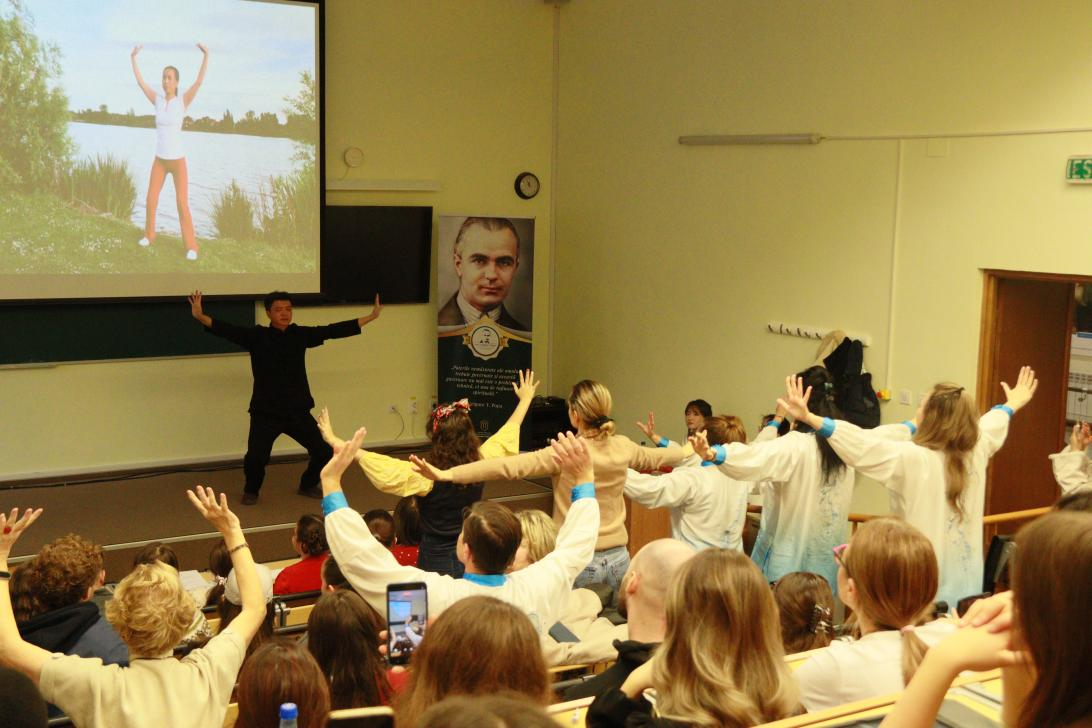
The core segment of the event—a lecture and demonstration on TCM—took place in the second-floor lecture hall. The session was hosted by Ms. Gabriela Cuciureanu, the foreign director of the Confucius Institute. Dr. Xu Xiaohu, an associate chief physician from Tongji Medical College of Huazhong University of Science and Technology, was invited as the main speaker. Dr. Xu’s lecture, titled “TCM Health Preservation and Daily Care—The Path of Balance and Harmony,” systematically explained the workings of the five internal organs according to TCM and the dialectical relationship between essence, qi, and spirit in classical TCM. He guided the audience to understand the essence of health preservation in TCM, emphasizing internal balance and coordination. Dr. Xu also demonstrated and led the audience in practicing “Ba Duan Jin,” immersing everyone in the profound realm of this ancient qigong, deepening their intuitive understanding of TCM health practices.
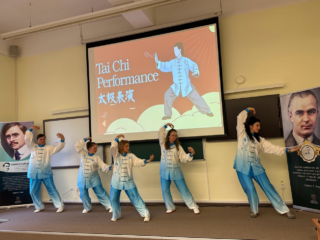
After the lecture, physicians from the Romanian TCM Association performed Tai Chi. These masters, who have practiced Tai Chi for many years, moved gracefully and precisely to classical Chinese music, blending softness and strength in their actions. Their performance conveyed a sense of tranquility and harmony, allowing the audience to experience peace of mind.
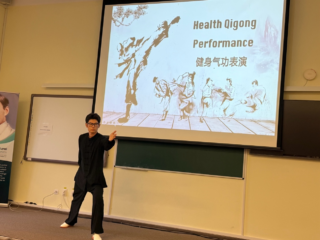
Next, Chinese language volunteer Wu Guanzhong demonstrated the traditional Chinese fitness qigong—Yijinjing. His fluid movements embodied strength and flexibility, sometimes solid as a rock and at other times fluid like a swimming dragon, perfectly illustrating the essence of Yijinjing, which promotes strong muscles and unblocked qi and blood circulation.
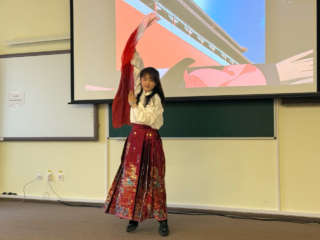
Then, volunteer Liu Zitong took the stage with a Liuqin, performing the classic piece “Happy Canal.” The clear and penetrating sound of the Liuqin evoked flowing rivers and twinkling stars, gradually unfolding a tranquil and vibrant pastoral scene. Following her, volunteer Bo Shengyi performed a dance titled “Brightness,” embodying Eastern aesthetics with her light movements and graceful twirls. Her radiant performance showcased her love for life and hope for the future, captivating the audience with the fusion of beauty and strength.
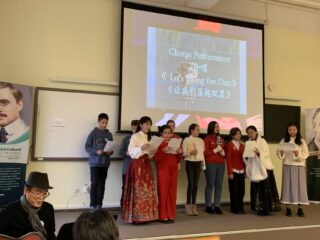
Finally, children from the Confucius Institute’s Chinese class sang the classic Chinese song “Let Us Row Our Boat,” accompanied by Chinese director Chen Gong on the guitar. This year marked the first expansion of Chinese language teaching at the Confucius Institute to primary and secondary schools in Iași. Students from three different teaching points, dressed in adorable costumes, performed the beautiful and heartfelt song. Their innocent and energetic voices filled the room with joy and purity, deeply touching everyone present and conveying the friendship and hope of Chinese and Romanian youth.